
Lay Flat Hose Supplier in Saudi Arabia — Water Discharge in 13 Proven Bore Sizes
A lay flat hose is a collapsible rubber discharge hose that flattens when empty, so long water runs can be rolled onto a coil instead of stacked as rigid pipe. FLEXI HOSE® lay flat hose is catalogued in 13 bore sizes from 40 mm to 203 mm at 10 bar / 150 psi working pressure, 30 bar / 450 psi burst, in 20 m coils, for −30 °C to +80 °C.
Shipping outside India? See our full hose export from India — Incoterms, export documentation and port of dispatch.
What Is a Lay Flat Hose?
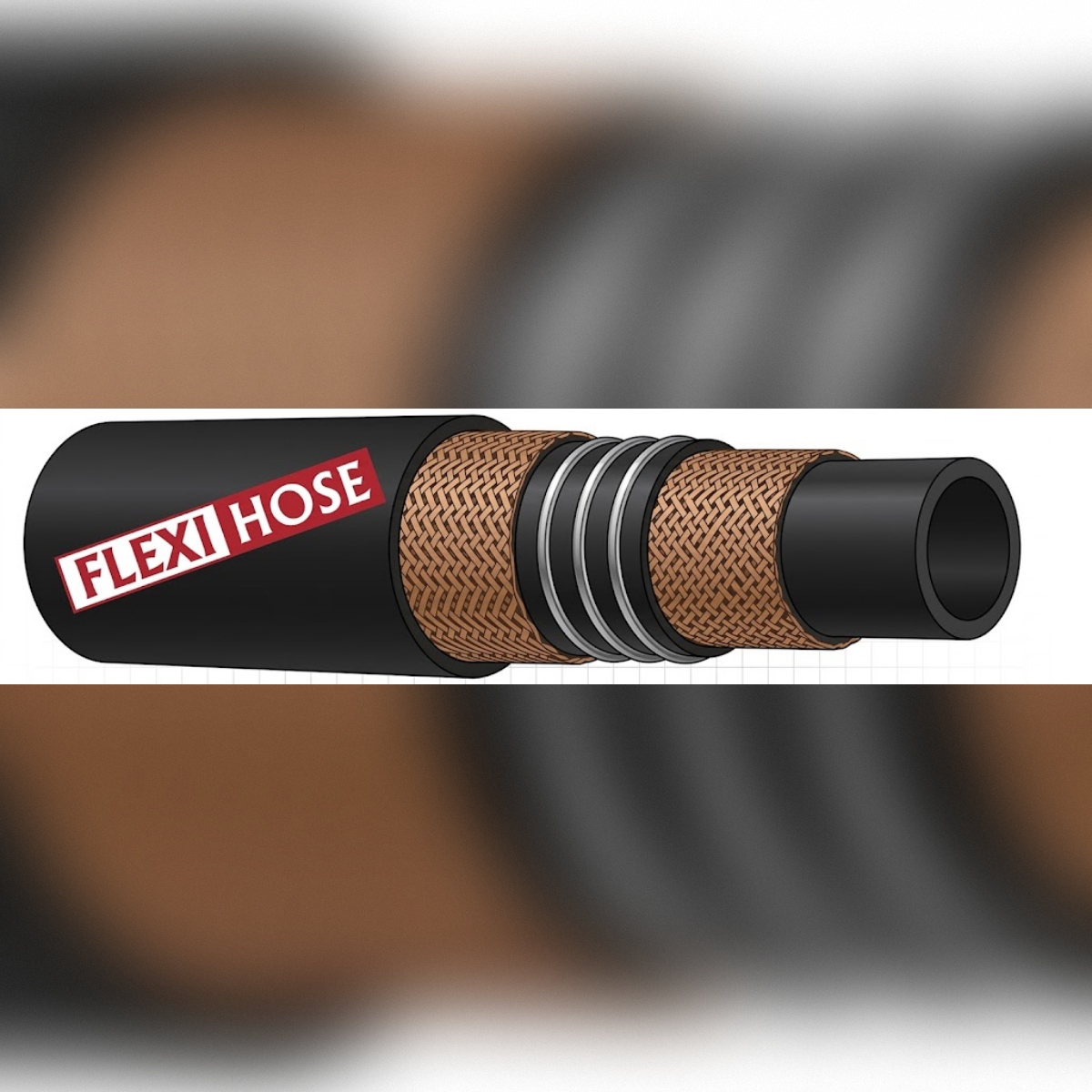
A lay flat hose is a water discharge hose built without a helix, so it collapses flat when it is not under pressure. That single design decision is what makes it useful: a 203 mm bore in rigid pipe is a haulage problem, while the same bore as a lay flat hose rolls onto a 20 m coil and is carried by two people. It is a discharge product only — it cannot draw a suction, because there is nothing holding the bore open.
The FLEXI HOSE® product has a smooth black SBR rubber compound tube, high tensile synthetic ply reinforcement, and an SBR rubber cover that is abrasion and weather resistant with a black smooth wrap finish. Working pressure is 10 bar / 150 psi with a burst of 30 bar / 450 psi at every catalogued bore, and every size is supplied in 20 m coils.
The catalogued duty is delivery of water or other water based liquids in industrial, agricultural and construction applications, across −30 °C to +80 °C. Where the same line has to draw as well as deliver, the helix-reinforced grade on the Saudi water suction hose page is the correct product, and the wider large bore series sits on the Saudi suction and discharge page.
On This Page
Jump straight to the lay flat hose information you need.
Lay Flat Hose in the FLEXI HOSE® 10 Bar Transfer Range
The lay flat hose is one of four large bore grades exported to Saudi Arabia in the 10 bar series. Every figure below is taken verbatim from the FLEXI HOSE® catalogue.
The lay flat hose grade covered on this page. Smooth SBR tube, synthetic ply reinforcement, smooth wrap finish cover.
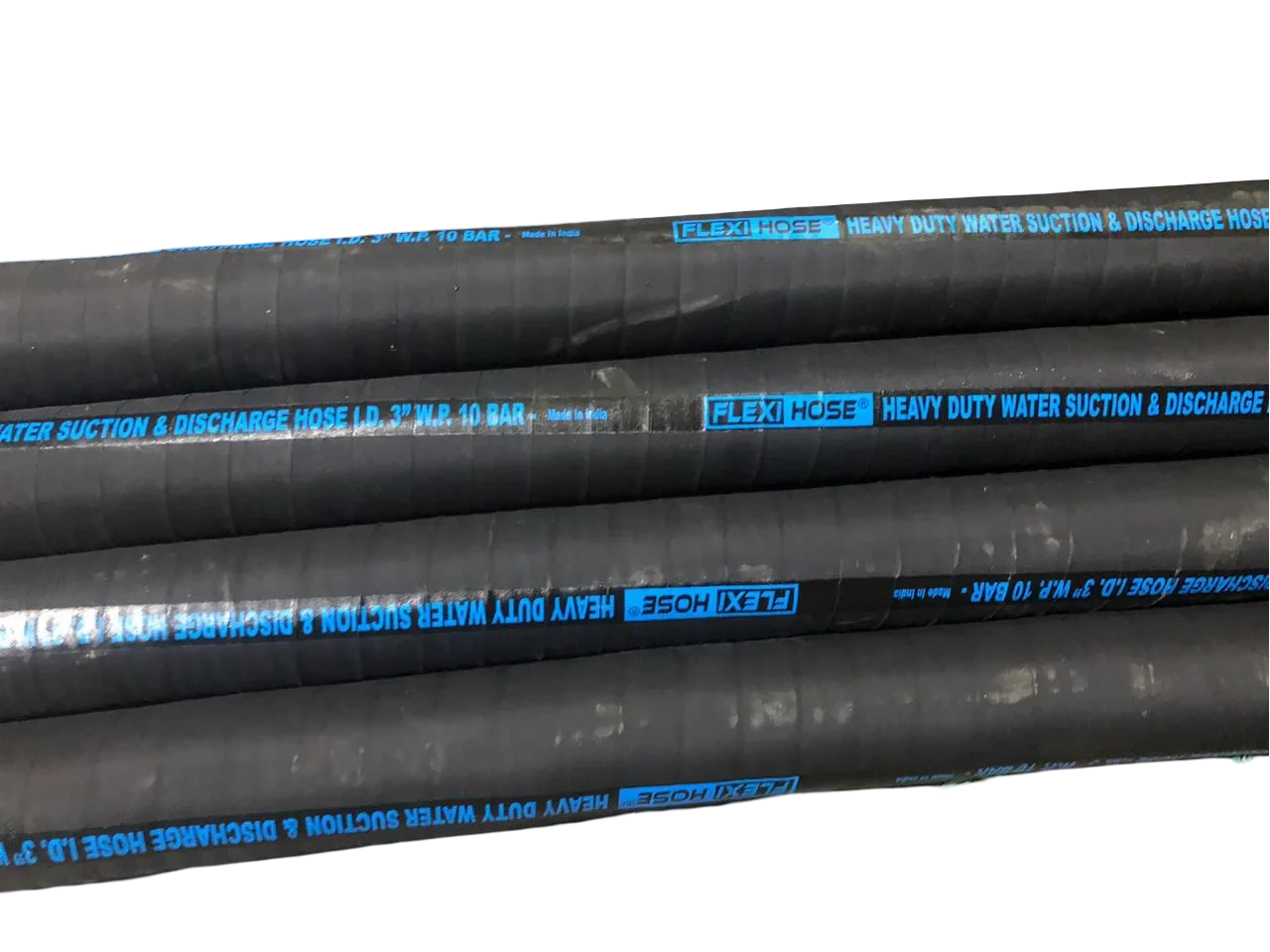
The suction-capable alternative. Same pressure rating, with a helical steel wire so the bore stays open under vacuum.
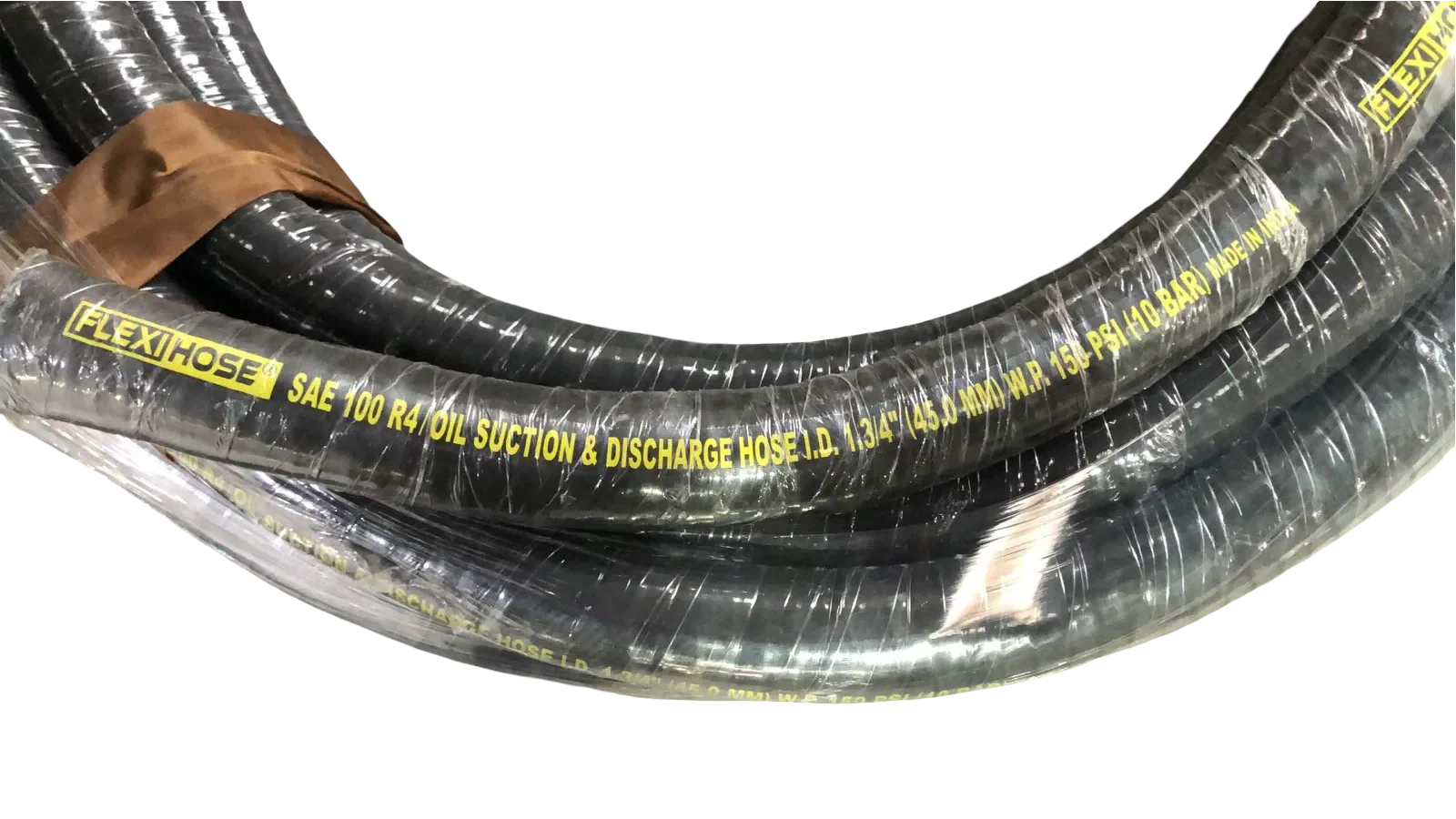
Where the liquid is petroleum based rather than water based, an NBR tube replaces the SBR compound.

The abrasive grade in the same family, for dry cement, fly ash and wet slurry to 14 inch bore.
Lay Flat Hose Bore and Pressure Table — All 13 Sizes
Working pressure, burst pressure and coil length are constant across the range. Only the bore and the outside diameter change, which makes selection here a flow calculation rather than a pressure one.
| I.D. (mm) | I.D. (inch) | O.D. (mm) | Working pressure (bar) | Working pressure (psi) | Burst pressure (bar) | Burst pressure (psi) | Coil length (m) |
|---|---|---|---|---|---|---|---|
| 40 | 1.9/16 | 46 | 10 | 150 | 30 | 450 | 20 |
| 45 | 1.3/4 | 51 | 10 | 150 | 30 | 450 | 20 |
| 51 | 2 | 57 | 10 | 150 | 30 | 450 | 20 |
| 60 | 2.3/8 | 67 | 10 | 150 | 30 | 450 | 20 |
| 63.5 | 2.1/2 | 70 | 10 | 150 | 30 | 450 | 20 |
| 70 | 2.3/4 | 77 | 10 | 150 | 30 | 450 | 20 |
| 76 | 3 | 83 | 10 | 150 | 30 | 450 | 20 |
| 80 | 3.5/32 | 87 | 10 | 150 | 30 | 450 | 20 |
| 90 | 3.17/32 | 97 | 10 | 150 | 30 | 450 | 20 |
| 102 | 4 | 109 | 10 | 150 | 30 | 450 | 20 |
| 127 | 5 | 135 | 10 | 150 | 30 | 450 | 20 |
| 152 | 6 | 160 | 10 | 150 | 30 | 450 | 20 |
| 203 | 8 | 215 | 10 | 150 | 30 | 450 | 20 |
No vacuum rating is listed for the lay flat hose, because it is a discharge-only product with no helix to hold the bore open. Any position that has to lift liquid needs the helix-reinforced water suction and discharge grade instead. Service temperature is −30 °C to +80 °C across all thirteen sizes, and the wall is thin by design — the difference between internal and outside diameter is 6 mm at 40 mm bore and 12 mm at 203 mm bore.
How to Select a Lay Flat Hose
Because pressure and coil length are constant across the range, selection comes down to whether the duty is discharge only, and then to bore.
1. Confirm the duty is discharge only
This is the decision that matters most. A lay flat hose has no helix, so it cannot lift liquid and it will collapse if a pump tries to draw through it. If the hose sits on the suction side of a pump, or has to prime itself from a sump, specify the helix-reinforced water suction and discharge grade instead.
2. Check the liquid is water based
The catalogued application is water or other water based liquids. Petroleum products need the NBR-lined oil grade, and abrasive slurry needs the abrasion resistant tube of the bulk material or dry cement grades. An SBR tube is the right compound for water and the wrong one for fuel.
3. Design to 10 bar at every bore
Working pressure is 10 bar / 150 psi and burst is 30 bar / 450 psi at all thirteen sizes, so unlike a hydraulic range the rating does not fall as the bore grows. Check the pump shut-off head rather than the running pressure, since a closed valve at the far end of a long run is the case that finds the weakest joint.
4. Size the bore on flow and run length
Thirteen bores are catalogued from 40 mm to 203 mm. On a long temporary line the friction loss over distance usually drives the bore up a size compared with the same flow over a short run, and the extra bore costs less than the extra pump.
5. Count the couplings, not just the metres
Every size ships in 20 m coils. A 200 m run is ten coils and nine joints, and joints are where a flattened hose fails first. Deciding the coupling type at enquiry stage — and ordering enough of them — is the practical difference between a line that works and one that leaks.
6. Check the temperature at both ends of the range
Service is −30 °C to +80 °C. In Saudi conditions the upper figure is rarely the constraint for the water itself, but a black hose lying on open ground in summer runs far hotter than the liquid inside it, and that is the temperature the cover actually sees.
Where Lay Flat Hose Is Used in Saudi Arabia
Anywhere water has to be moved a long way temporarily, over ground, and then picked up again.
Irrigation and agricultural transfer
The farming belts around Al-Kharj, Qassim, Hail and Tabuk run centre pivot and surface irrigation from wells and reservoirs. A lay flat hose carries water from the pump to the field and is rolled up and moved when the block changes, which is the exact behaviour a rigid line cannot offer.
Construction site dewatering discharge
Excavations across the Riyadh, NEOM and Red Sea programmes pump groundwater out continuously. The suction side takes a helix hose; the discharge side, which is usually the far longer run to a drain or settlement pond, is where the lay flat hose does the work.
Temporary water distribution
Camps, batching plants and remote work fronts need water before the permanent network reaches them. A few coils and a tanker fill point is a distribution system that can be installed in a morning and recovered intact when the site moves on.
Dust suppression on haul roads
Quarries, mines and earthworks in the Kingdom spray unpaved roads to keep dust down. The lines are long, they change position weekly and they get driven over, so a flat hose that rolls up beats a pipe that has to be dismantled.
Mine and quarry water management
Phosphate, gold and limestone operations move process and pit water across changing ground. Because a lay flat hose stores as a coil rather than a stack, a site can hold several hundred metres of spare capacity in the space a pipe rack would need for twenty.
Tank filling and municipal contract work
Filling storage tanks, flushing new mains and discharging from tankers are short-duration jobs that would not justify permanent pipework. The 4 inch to 8 inch bores cover most of this duty, and the 20 m coil is a convenient unit for a contractor to price against.
Why Buy Lay Flat Hose Direct from the Manufacturer
Vardhman Hydraulic Hoses Pvt. Ltd. has manufactured under the FLEXI HOSE® brand since 1980, from a single plant at Bhiwadi, Rajasthan.
Factory direct, no trading layer
You buy from the plant that mixes the compound and builds the hose. That means the specification you are quoted is the specification that is manufactured, and a technical question is answered by the people who made the product rather than by a reseller.
A rubber hose, not a woven sleeve
Many products sold as lay flat are extruded PVC or a coated textile sleeve. This one is a rubber hose — SBR tube, high tensile synthetic plies, SBR cover — built on the same line as the rest of the 10 bar series. That is why it carries a 30 bar burst rather than a nominal one.
Thirteen bores, including the awkward ones
The range includes 45 mm, 60 mm, 70 mm, 80 mm and 90 mm alongside the round inch sizes. Those intermediate bores exist because irrigation and pump equipment does not always come in whole inches, and matching the pump outlet avoids a reducer at the one joint carrying full flow.
Consistent 20 m coils across the range
Every catalogued size ships at 20 m, from 40 mm to 203 mm. That makes a lay flat hose order easy to plan against a run length and easy to price per metre, and it means site stock is interchangeable between bores in a way that mixed coil lengths would prevent.
Complete export document set
Every shipment carries a commercial invoice, packing list, certificate of origin, bill of lading and test certificates. Terms are FOB, CIF or CFR ex Nhava Sheva (JNPT) or Mundra Port, so customs clearance at the Saudi port is not held up on paperwork.
Four Product Families, 26 Catalogued Products
The water discharge grade sits inside a full catalogue exported from one plant, so a mixed order ships as one consignment.

Air, water, steam, sand blast, rock drill, cable coolant and UHMWPE grades.
- Air Hose Type 1 & Type 2
- Steam Hose, 1 and 2 wire braid
- Sand Blast Hose

SAE 100 R1, R2, R3 and R6 plus EN 856 four spiral grades.
- SAE 100 R1 AT and R2 AT
- SAE 100 R3 and R6
- EN 856 4SP / 4SH
The 10 bar large bore series for water, oil and solids.
- Water Suction & Discharge
- Oil Suction & Discharge
- Bulk Material and Lay Flat
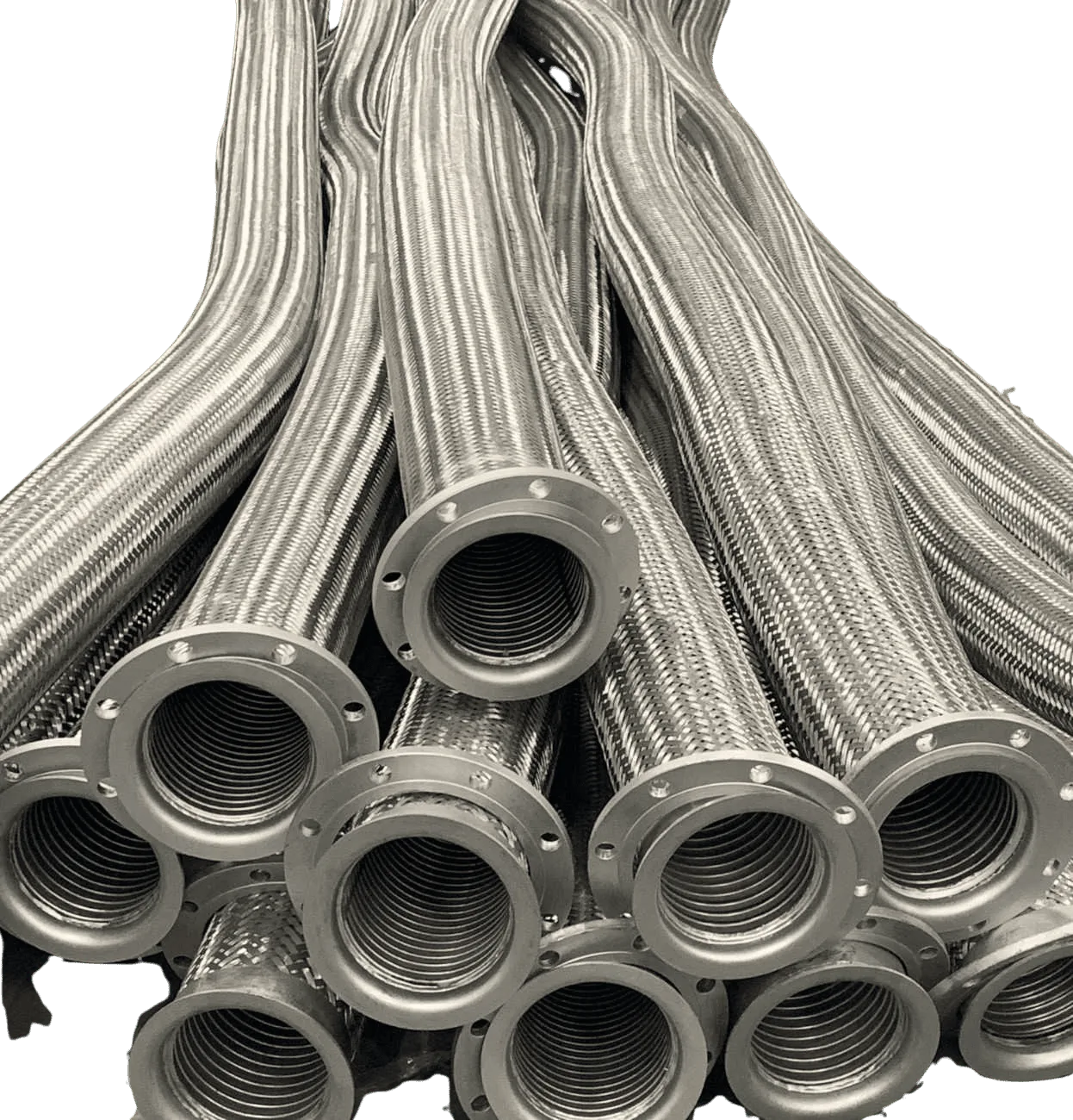
Corrugated stainless steel, PTFE lined hose and insulating matting.
- SS Flexible Hose, EN ISO 10380
- SS PTFE Teflon Hose
- Electrical Insulating Mat
Request a Lay Flat Hose Quotation for Saudi Arabia
Send bore, total run length, the number of coils, the coupling type you use and your discharge port. A quotation with specification, test certificate scope and transit window follows on the same working day wherever possible. Price on request — we do not publish list pricing.
People Also Ask
Short answers to the questions Saudi agricultural, contracting and mining buyers search for most often.
What is a lay flat hose used for?
Delivery of water and other water based liquids in industrial, agricultural and construction applications. Typical duties are irrigation transfer, construction dewatering discharge, temporary water distribution, dust suppression and tank filling.
Can a lay flat hose be used for suction?
No. It has no helix wire, so there is nothing holding the bore open against negative pressure and it will collapse on the suction side of a pump. Suction duty needs the helix-reinforced water suction and discharge grade in the same 10 bar series.
What pressure does a lay flat hose hold?
10 bar / 150 psi working pressure with a 30 bar / 450 psi burst, at every bore from 40 mm to 203 mm. The rating is constant across the range, so a larger bore does not mean a lower pressure as it would on a hydraulic hose.
What sizes are catalogued?
Thirteen internal diameters: 40, 45, 51, 60, 63.5, 70, 76, 80, 90, 102, 127, 152 and 203 mm, with outside diameters from 46 mm to 215 mm. The intermediate sizes exist to match pump and irrigation equipment that does not come in whole inches.
How long is each coil?
Twenty metres, at every one of the thirteen catalogued bores. A longer run is made up from coupled coils, so the coupling type and quantity should be settled with the order rather than sourced separately on site.
Is it suitable for fuel or chemicals?
No. The tube is an SBR rubber compound catalogued for water and water based liquids. Petroleum products need the NBR-lined oil suction and discharge grade, and aggressive chemicals need the UHMWPE lined hose, both of which are separate products in the same catalogue.
Lay Flat Hose — Frequently Asked Questions
Specification, construction and export questions, answered from the FLEXI HOSE® catalogue.
The tube is a smooth black SBR rubber compound. Reinforcement is high tensile synthetic plies, with no helix wire, and the cover is SBR rubber that is abrasion and weather resistant with a black smooth wrap finish. Leaving the helix out is what allows the hose to collapse flat when empty.
Because it is a discharge-only product. The catalogue lists no vacuum figure against it, and none is published here. A hose without a helix has nothing to resist external atmospheric pressure, so it flattens rather than drawing liquid.
10 bar, equivalent to 150 psi, working pressure, with a burst pressure of 30 bar or 450 psi. Both figures are constant across all thirteen catalogued bores from 40 mm to 203 mm.
All thirteen: 40, 45, 51, 60, 63.5, 70, 76, 80, 90, 102, 127, 152 and 203 mm internal diameter. Outside diameters run from 46 mm to 215 mm, and every size can be combined with the rubber, hydraulic and metallic families on one order.
−30 °C to +80 °C. In Saudi conditions the cover temperature rather than the water temperature is usually the governing figure, since a black hose lying exposed on open ground in summer runs hotter than the liquid it carries.
Both are catalogued at 10 bar / 150 psi working and 30 bar / 450 psi burst in 20 m coils. The suction grade has a helical steel wire, is rated to 0.9 bar vacuum and runs from 19 mm to 203 mm. The lay flat hose has no helix, carries no vacuum rating and starts at 40 mm.
The catalogued application is water or other water based liquids. Petroleum based liquids need the NBR-lined oil suction and discharge grade, and chemical duty needs the UHMWPE lined hose. Using an SBR tube outside its catalogued media is the most common cause of premature tube failure.
No. Only three FLEXI HOSE products carry a BIS licence: Water Hose to IS 444-2017 Type 2 under CM/L 8400124510, and Air Hose Type 1 and Type 2 to IS 446-2017. No BIS or Indian Standard claim is made for the lay flat grade.
Divide the run by 20 m and add one joint for every coil after the first. A 200 m line is ten coils and nine couplings. Couplings are the usual failure point on a flat hose, so ordering them with the hose and matching them to the bore is worth doing at quotation stage.
Ex Nhava Sheva (JNPT) or Mundra Port on FOB, CIF or CFR terms, with sea transit of 7 to 9 days to Jeddah, 7 to 10 to Dammam and 8 to 10 to Jubail and Yanbu. Because the product packs flat, shipping cost per metre is lower than for any other large bore grade in the range.