
Carbon Free Hose Supplier in Saudi Arabia — Cable Coolant Hose in 8 Proven Bore Sizes
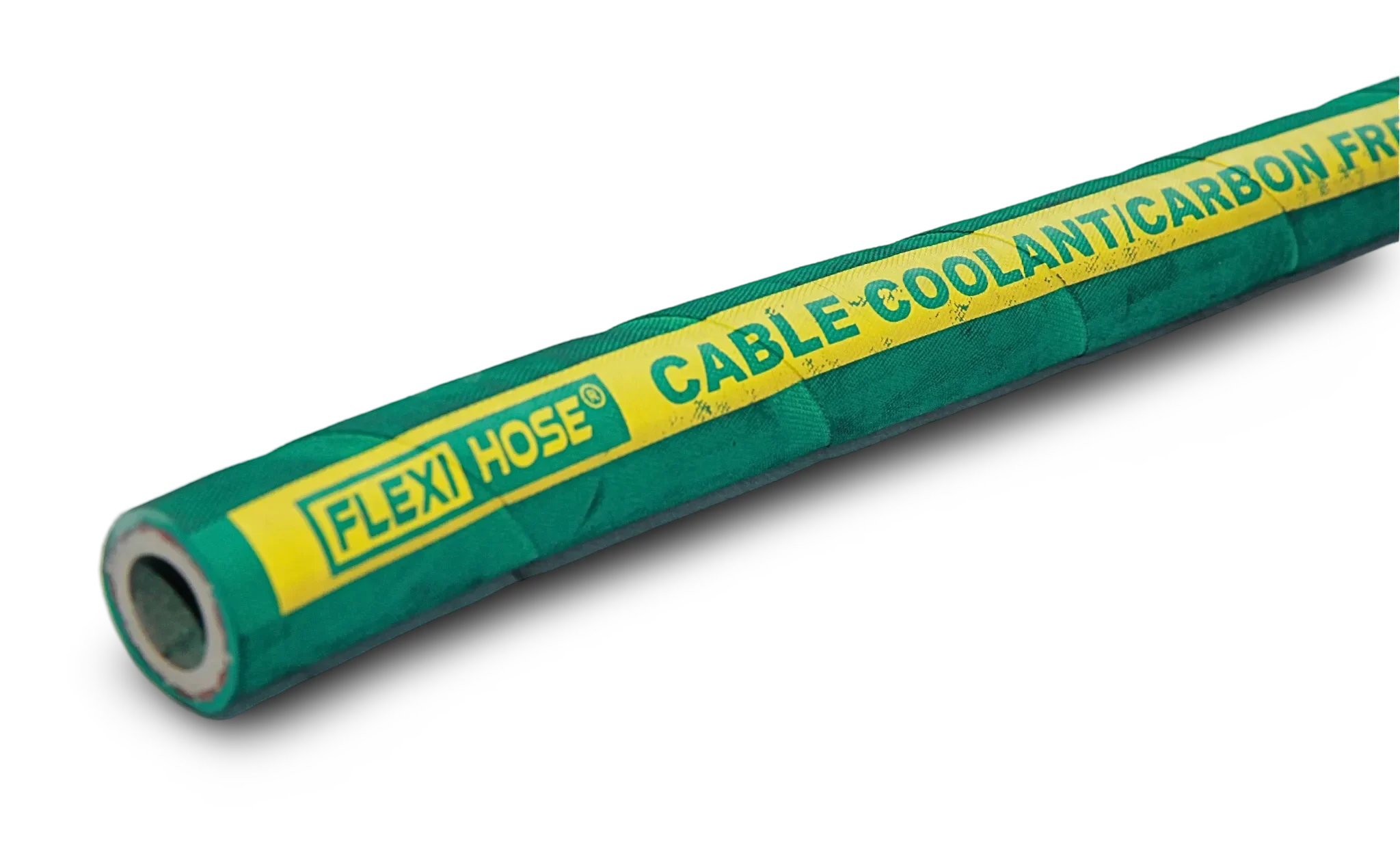
A carbon free hose is a non-conductive rubber hose built for furnace coolant duty, where the cooling water circuit runs alongside live electrical conductors. FLEXI HOSE® carbon free hose is catalogued in 8 bore sizes from 3/8 inch to 2 inch, rated 250 PSI / 17.20 BAR working and 1000 PSI / 69 BAR burst, for service from −40 °C to +100 °C.
Shipping outside India? See our full hose exporter in India — Incoterms, export documentation and port of dispatch.
What Is a Carbon Free Hose?
A carbon free hose — also specified as a cable coolant hose — is a rubber hose compounded without carbon black in the lining, so the hose itself does not provide a conductive path. On an electric arc furnace or an induction furnace, cooling water is carried to and from water-cooled cables and panels that sit at high electrical potential. An ordinary carbon-loaded rubber hose in that position can leak current. The carbon free hose exists to remove that risk.
The FLEXI HOSE® product is lined with a white synthetic rubber compound, reinforced with single or double high tenacity synthetic textile yarn braids, and covered in a green rubber compound resistant to abrasion, ageing and ozone, supplied with or without an asbestos cover. The white lining is the visual signature of the grade: no carbon black, therefore no black tube.
Carbon free hose working pressure is 250 PSI / 17.20 BAR across seven of the eight catalogued bores, with a minimum burst of 1000 PSI / 69 BAR. Service temperature is −40 °C to +100 °C. Where the duty is steam rather than coolant water, the Saudi steam hose page covers the wire braided grades, and the wider rubber range sits on the Saudi industrial hoses page.
On This Page
Jump straight to the carbon free hose information you need.
Carbon Free Hose in the FLEXI HOSE® Industrial Range
The furnace hall usually needs more than one grade. These are the four exported to Saudi Arabia most often alongside the cable coolant line. Every figure below is taken verbatim from the FLEXI HOSE® catalogue.
The carbon free hose grade covered on this page. White synthetic rubber lining, textile yarn braid reinforcement, green ozone resistant cover.

Saturated steam service on the same plant, catalogued across the full bore range with a single high tensile wire braid.

Compressed air distribution around the furnace and casting bays, carrying a BIS licence for the Indian standard.
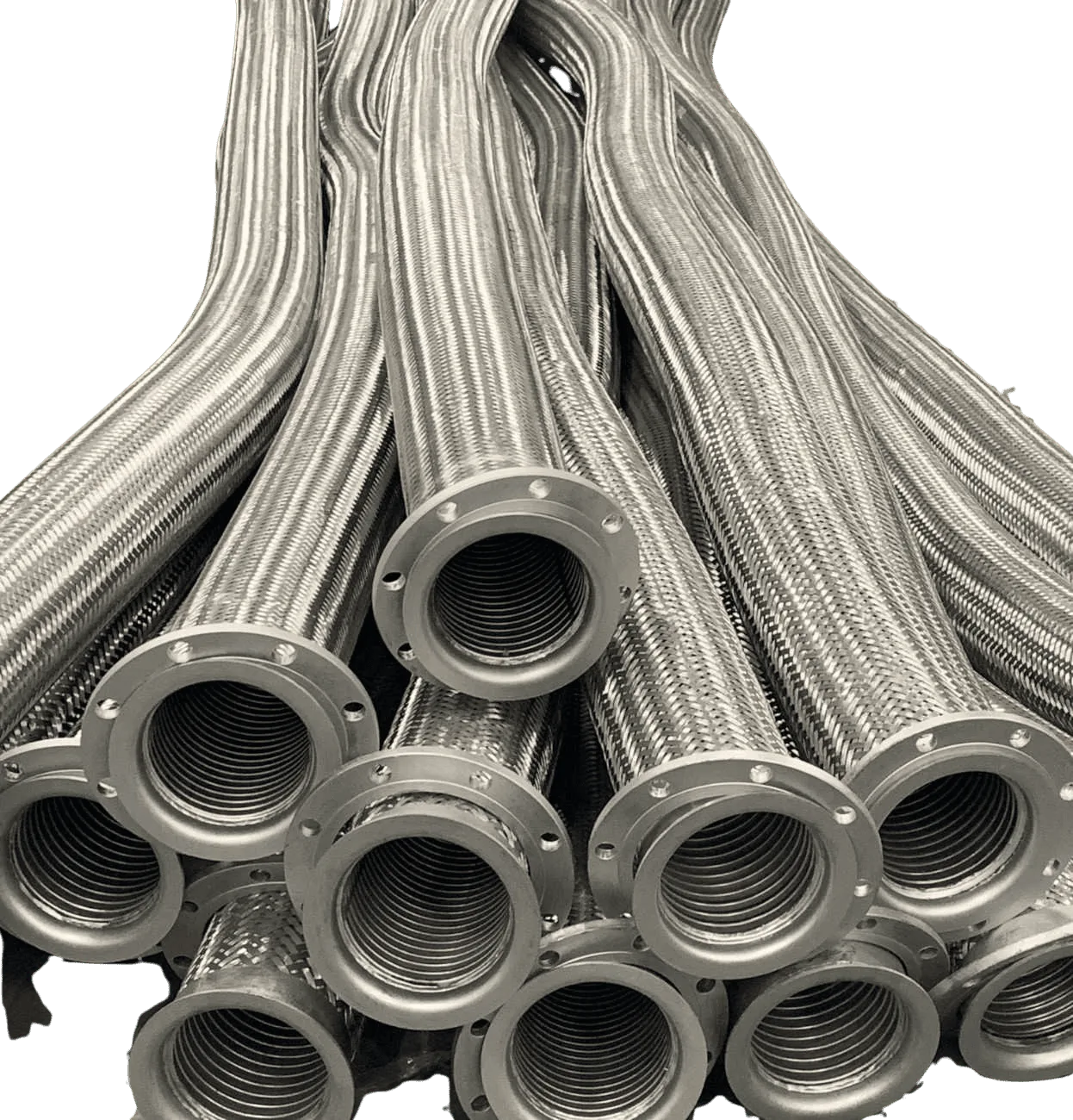
Where the connection must be metallic rather than non-conductive — hot utility tie-ins, expansion and vibration take-up.
Carbon Free Hose Bore and Pressure Table — All 8 Sizes
PSI and BAR pairs are published exactly as catalogued and are not recalculated. Note the 2 inch bore, which carries a lower rating than the rest of the line.
| Nominal bore (inch) | Nominal bore (mm) | Mean O.D. (mm) | Working pressure (PSI) | Working pressure (BAR) | Burst pressure (PSI) | Burst pressure (BAR) |
|---|---|---|---|---|---|---|
| 3/8 inch | 10.00 | 19.00 | 250 | 17.20 | 1000 | 69 |
| 1/2 inch | 12.50 | 21.50 | 250 | 17.20 | 1000 | 69 |
| 5/8 inch | 15.00 | 26.00 | 250 | 17.20 | 1000 | 69 |
| 3/4 inch | 20.00 | 30.00 | 250 | 17.20 | 1000 | 69 |
| 1 inch | 25.00 | 37.00 | 250 | 17.20 | 1000 | 69 |
| 1.1/4 inch | 31.50 | 44.00 | 250 | 17.20 | 1000 | 69 |
| 1.1/2 inch | 38.00 | 53.00 | 250 | 17.20 | 1000 | 69 |
| 2 inch | 50.00 | 67.00 | 200 | 14 | 800 | 56 |
The 2 inch bore is the exception in this range: 200 PSI / 14 BAR working and 800 PSI / 56 BAR burst, against 250 PSI / 17.20 BAR and 1000 PSI / 69 BAR at every smaller bore. A specification written around the 250 PSI figure and then ordered in 2 inch will be over-stated, so the largest bore should be checked separately at the design stage. Service temperature is −40 °C to +100 °C across all eight sizes.
How to Select a Carbon Free Hose
Work through media, pressure, temperature and bore in that order. The selection is short because the range is narrow, but each step removes a common specification error.
1. Confirm the duty is genuinely non-conductive
The carbon free grade earns its cost only where the cooling circuit sits at or near electrical potential — arc furnace cable cooling, induction coil cooling, transformer and rectifier cooling. If the water line is electrically isolated from the plant, a standard water hose is the correct and cheaper product. Specify a carbon free hose only where the hose itself must not be part of the circuit.
2. Match pressure to the pump, not the header
Working pressure is 250 PSI / 17.20 BAR from 3/8 inch to 1.1/2 inch. The figure to design against is the pump shut-off head plus any surge, not the steady running pressure at the header. Minimum burst is 1000 PSI / 69 BAR, four times working pressure, and burst is a test figure rather than an operating allowance.
3. Check the temperature at both ends
Service range is −40 °C to +100 °C. Coolant return temperature is the number that matters on a furnace, and it is easy to quote the supply figure by mistake. Radiant heat from the shell is a separate question and is handled by routing and shielding rather than by the hose rating.
4. Fix the bore against flow, then check the 2 inch exception
The carbon free hose is catalogued in eight bores, 3/8 inch to 2 inch, with mean outside diameters from 19.00 mm to 67.00 mm. Size the bore on required flow and acceptable velocity. If the answer is 2 inch, drop the design pressure to 200 PSI / 14 BAR, because that bore is rated lower than the rest of the line.
5. State the cover and the braid on the enquiry
Reinforcement is single or double high tenacity synthetic textile yarn braid, and the cover is supplied with or without an asbestos overlay. Both are order options rather than fixed features, so a carbon free hose enquiry that states bore, length, braid and cover is quoted once instead of three times.
6. Send lengths, not just bore
Cable coolant runs are made up to length with the end fittings the furnace builder specified. Sending the cut lengths and the fitting detail with the first enquiry lets the assemblies be built during production rather than after arrival, which is usually worth more than the unit price difference.
Where Carbon Free Hose Is Used in Saudi Arabia
Saudi Arabia melts and casts at scale. Almost every position below sits inside a furnace hall or a smelter potroom.
Electric arc furnace cable cooling
The steel plants at Jubail and Al-Jubail Industrial City run electric arc melting, where water-cooled power cables feed the electrodes. This is the original duty for a carbon free hose: the coolant line runs the length of a live conductor, and a conductive tube would be a fault path rather than a hose.
Aluminium smelting and rectifier rooms
Ras Al Khair smelts aluminium, and a potline runs on rectified DC at very high current. Rectifier and busbar cooling circuits use carbon free hose for the same reason the furnace hall does, in the smaller bores where the flow per circuit is modest.
Induction furnace and foundry work
Induction coils are water cooled and sit at potential by definition. Saudi foundries and re-rolling operations around Riyadh, Dammam and Jeddah use the 3/8 inch to 3/4 inch carbon free hose bores here, where the runs are short and the bend radius matters more than the flow rate.
Welding plant and resistance equipment
Water-cooled welding guns, transformers and resistance welding heads all cool through hose that touches energised metal. Fabrication yards serving the Saudi construction and pipeline sectors buy the smallest carbon free hose bores in quantity, usually as short made-up lengths.
Power generation auxiliaries
Generator and exciter cooling, plus instrument and control panel cooling circuits inside power stations, use the same non-conductive logic. Saudi Electricity Company plant and the captive generation attached to industrial cities are the buyers, and 1 inch to 1.1/2 inch covers most of it.
Desalination plant electrical rooms
Large desalination trains carry heavy electrical infrastructure alongside the process. Where cooling water is taken into a switchroom or a drive room, the specification often calls for a carbon free hose regardless of the nominal isolation, because the consequence of a leak into live equipment is not proportional to its likelihood.
Why Buy Carbon Free Hose Direct from the Manufacturer
Vardhman Hydraulic Hoses Pvt. Ltd. has manufactured under the FLEXI HOSE® brand since 1980, from a single plant at Bhiwadi, Rajasthan.
Factory direct, no trading layer
You buy from the plant that mixes the compound and builds the hose. That means the specification you are quoted is the specification that is manufactured, and a technical question is answered by the people who made the product rather than by a reseller.
The compound is made in house
A carbon free hose is defined by what is left out of the lining compound, so the mixing is the product. Compounding on site means the white lining is formulated and checked in the same building where the hose is built, rather than bought in as a pre-mixed sheet from a third party.
In-house R&D lab and calibrated test equipment
Carbon free hose pressure, burst and dimensional testing is done on site in the company R&D laboratory, and all test equipment is calibrated by NABL-accredited bodies. Test certificates for the supplied batch travel with the consignment.
Made to length with your fittings
Cable coolant assemblies are rarely bought by the coil. Building them to the furnace drawing at the factory — correct length, correct end connection, braid and cover as specified — means the hall fits them rather than makes them, which matters most during a shutdown.
Complete export document set
Every shipment carries a commercial invoice, packing list, certificate of origin, bill of lading and test certificates. Terms are FOB, CIF or CFR ex Nhava Sheva (JNPT) or Mundra Port, so customs clearance at the Saudi port is not held up on paperwork.
Delivery, Ports and Transit to Saudi Arabia
Shipped ex Nhava Sheva (JNPT) or Mundra Port on FOB, CIF or CFR terms. Transit times below are sea transit and exclude clearance.
| Saudi port | Serves | Transit (days) |
|---|---|---|
| Dammam | Eastern Province steel and foundry, Riyadh onward haulage | 7–10 |
| Jubail | Jubail Industrial City, arc furnace and petrochemical complex | 8–10 |
| Jeddah | Western Region fabrication, Rabigh, Red Sea desalination | 7–9 |
| Yanbu | Yanbu Industrial City, Red Sea refining and power | 8–10 |
| Riyadh | Inland via Dammam, dry port clearance | 9–12 |
| NEOM / Tabuk | North-west projects, Duba onward | 10–14 |
Because a carbon free hose is usually supplied as made-up lengths rather than as coil stock, the end fitting detail should travel with the enquiry. Ras Al Khair is served through Jubail for onward haulage.
Four Product Families, 26 Catalogued Products
The cable coolant grade sits inside a full catalogue exported from one plant, so a mixed order ships as one consignment.
Air, water, steam, sand blast, rock drill, cable coolant and UHMWPE grades.
- Air Hose Type 1 & Type 2
- Steam Hose, 1 and 2 wire braid
- Sand Blast Hose

SAE 100 R1, R2, R3 and R6 plus EN 856 four spiral grades.
- SAE 100 R1 AT and R2 AT
- SAE 100 R3 and R6
- EN 856 4SP / 4SH
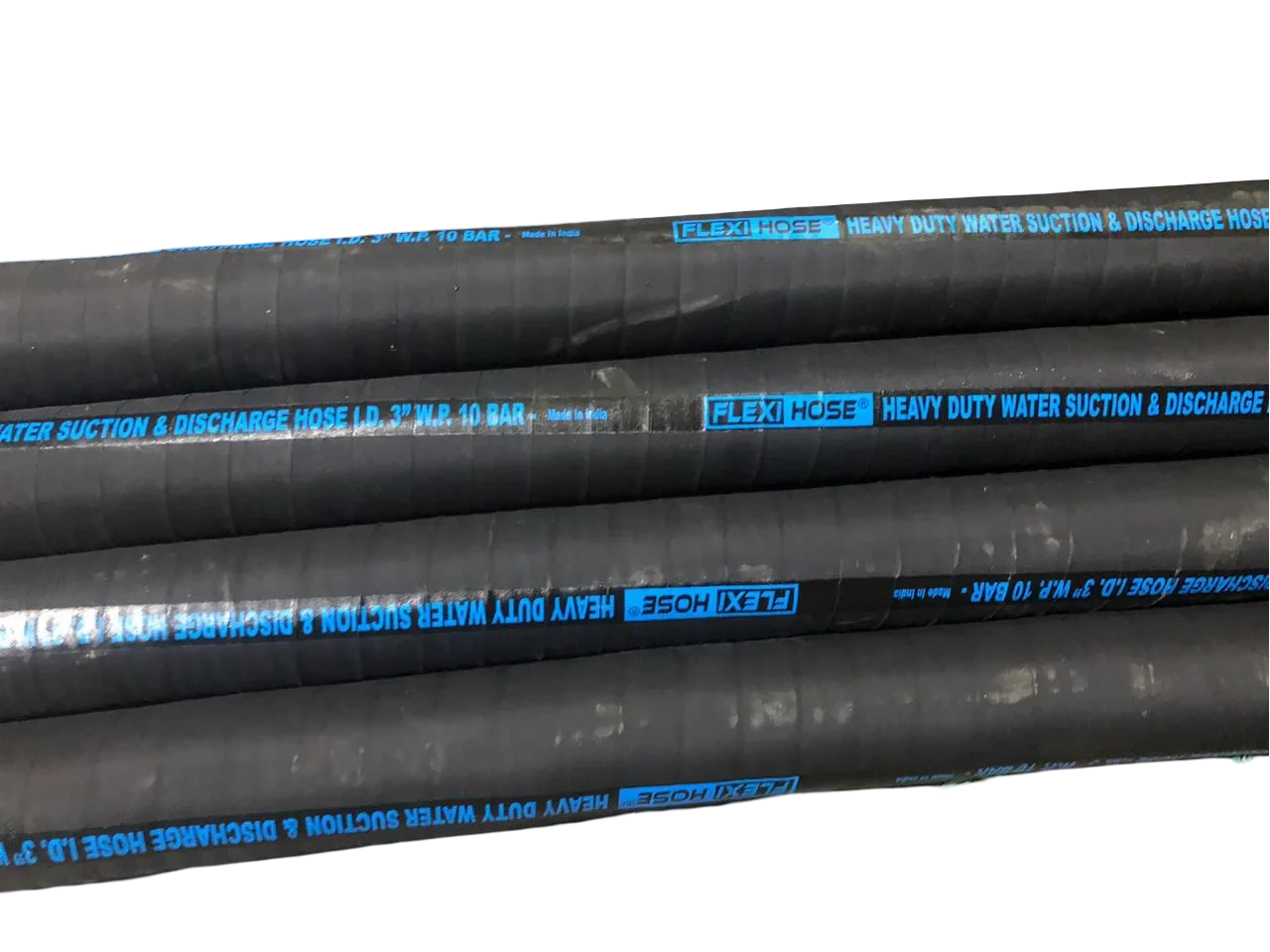
The 10 bar large bore series for water, oil and solids.
- Water Suction & Discharge
- Oil Suction & Discharge
- Bulk Material and Lay Flat
Corrugated stainless steel, PTFE lined hose and insulating matting.
- SS Flexible Hose, EN ISO 10380
- SS PTFE Teflon Hose
- Electrical Insulating Mat
Request a Carbon Free Hose Quotation for Saudi Arabia
Send bore, cut lengths, single or double braid, cover preference, end fitting detail and your discharge port. A quotation with specification, test certificate scope and transit window follows on the same working day wherever possible. Price on request — we do not publish list pricing.
People Also Ask
Short answers to the questions Saudi furnace and maintenance buyers search for most often.
What is a carbon free hose used for?
A carbon free hose is used for furnace coolant duty in electrical and steel plant, and other applications where the hose must be non-conductive. Typical positions are arc furnace cable cooling, induction coil cooling, rectifier and busbar cooling, and water-cooled welding equipment.
Why is the lining white instead of black?
Because there is no carbon black in the compound. Carbon black is the filler that makes ordinary rubber both black and mildly conductive, so a lining formulated without it comes out white. The white tube is the visible evidence of the grade.
What pressure does the cable coolant hose hold?
Carbon free hose is rated 250 PSI / 17.20 BAR working with a 1000 PSI / 69 BAR minimum burst, at every bore from 3/8 inch to 1.1/2 inch. The 2 inch bore is rated lower, at 200 PSI / 14 BAR working and 800 PSI / 56 BAR burst.
What temperature range is catalogued?
The carbon free hose is catalogued at −40 °C to +100 °C service temperature across all eight bores. On a furnace the figure to check is the coolant return temperature rather than the supply, since the return is the hotter of the two.
Is it the same as a water hose?
No. A standard water hose is a black carbon-loaded rubber product rated 145 PSI / 10 BAR and is the correct choice for general water transfer. The carbon free grade is a different compound at a higher pressure rating, bought specifically for its non-conductive lining.
What sizes are exported to Saudi Arabia?
All eight catalogued carbon free hose bores: 3/8, 1/2, 5/8, 3/4, 1, 1.1/4, 1.1/2 and 2 inch, with mean outside diameters from 19.00 mm to 67.00 mm. They can be combined with the rubber, hydraulic and metallic families on a single order.
Carbon Free Hose — Frequently Asked Questions
Specification, construction and export questions, answered from the FLEXI HOSE® catalogue.
The lining is a white synthetic rubber compound. Reinforcement is single or double high tenacity synthetic textile yarn braid, and the cover is a green rubber compound resistant to abrasion, ageing and ozone, supplied with or without an asbestos cover. There is no steel wire in the construction, which is what keeps it flexible at small bores.
The absence of carbon black from the lining compound. Carbon black is the reinforcing filler used in ordinary rubber, and it is mildly conductive. Formulating the tube without it removes the conductive path through the hose wall, which is the entire reason the grade exists for furnace coolant duty.
Eight bores: 3/8, 1/2, 5/8, 3/4, 1, 1.1/4, 1.1/2 and 2 inch. In millimetres those are 10.00, 12.50, 15.00, 20.00, 25.00, 31.50, 38.00 and 50.00, with mean outside diameters of 19.00, 21.50, 26.00, 30.00, 37.00, 44.00, 53.00 and 67.00 mm respectively.
The catalogue prints 200 PSI / 14 BAR working and 800 PSI / 56 BAR burst for the 2 inch size, against 250 PSI / 17.20 BAR and 1000 PSI / 69 BAR at every smaller bore. It is published exactly as catalogued. Design the largest bore to its own figure rather than to the range figure.
They are published as the catalogue prints them and are not recalculated. The 250 PSI / 17.20 BAR pairing is the catalogued pair for this product. Converting one figure to the other independently will produce a number that does not match the specification the hose was built and tested against.
Burst is a destructive test figure, four times working pressure across the range at 1000 PSI / 69 BAR. It confirms the safety margin in the construction; it is not an operating allowance and no part of the coolant circuit should be designed to approach it.
Yes. Cable coolant lines are normally supplied cut to length with the end connections the furnace builder specified, rather than as coil stock. Send the cut lengths and the fitting detail with the enquiry so the assemblies are built during production instead of after the container arrives.
No. Only three FLEXI HOSE products carry a BIS licence: Water Hose to IS 444-2017 Type 2 under CM/L 8400124510, and Air Hose Type 1 and Type 2 to IS 446-2017. The carbon free grade is not made to an Indian Standard and no BIS claim is made for it.
Both are high tenacity synthetic textile yarn. The double braid construction is specified where the duty is more demanding in handling or routing. Because it is an order option rather than a fixed feature of the grade, it should be stated on the enquiry along with the cover preference.
Ex Nhava Sheva (JNPT) or Mundra Port on FOB, CIF or CFR terms, with sea transit of 7 to 10 days to Dammam, 8 to 10 to Jubail and Yanbu, and 7 to 9 to Jeddah. Every shipment carries a commercial invoice, packing list, certificate of origin, bill of lading and test certificates.