

Fly Ash Hose Supplier in Saudi Arabia — Dry Cement Transfer in 10 Proven Bore Sizes
A fly ash hose is a helix-reinforced rubber suction and discharge hose built to move dry cement, fly ash and abrasive slurry at cement plants and construction sites. FLEXI HOSE® fly ash hose is catalogued in 10 bore sizes from 2 inch to 14 inch at 10 bar / 150 psi working pressure, with burst at three times working pressure and service from −30 °C to +70 °C.
Shipping outside India? See our full export capability from India — Incoterms, export documentation and port of dispatch.
What Is a Fly Ash Hose?
A fly ash hose is a large bore rubber hose designed for the suction and discharge of dry cement, fly ash, wet slurry and other abrasive media at cement plants and construction sites. What separates it from a general transfer hose is the combination that carries abrasive powder: a highly abrasion resistant tube, high tensile synthetic plies, and a steel helix wire so the hose does not collapse when a vacuum is drawn on it.
The FLEXI HOSE® product has a smooth black NR rubber blend tube, high tensile synthetic ply reinforcement with helix wire, and a black SBR rubber cover that is weather and abrasion resistant with a corrugated wrap finish. Fly ash hose working pressure is 10 bar / 150 psi. Test pressure is 1.5 times working pressure and burst pressure is three times working pressure, which puts burst at 30 bar / 450 psi.
Because a fly ash hose spends its life carrying particles that cut rubber, the tube compound and the cover are the whole product. The service range is −30 °C to +70 °C. Related grades sit on the Saudi suction and discharge page, and where the abrasive is propelled rather than conveyed, the Saudi sand blast hose page covers that duty.
On This Page
Jump straight to the fly ash hose information you need.
Fly Ash Hose in the FLEXI HOSE® 10 Bar Transfer Range
The fly ash hose is one of four large bore grades exported to Saudi Arabia for bulk and abrasive duty. Every figure below is taken verbatim from the FLEXI HOSE® catalogue.
The fly ash hose grade covered on this page. NR rubber blend tube, synthetic plies with helix wire, corrugated SBR cover.
Loading and unloading of cement, fly ash, gravel and sand where vacuum suction is required.
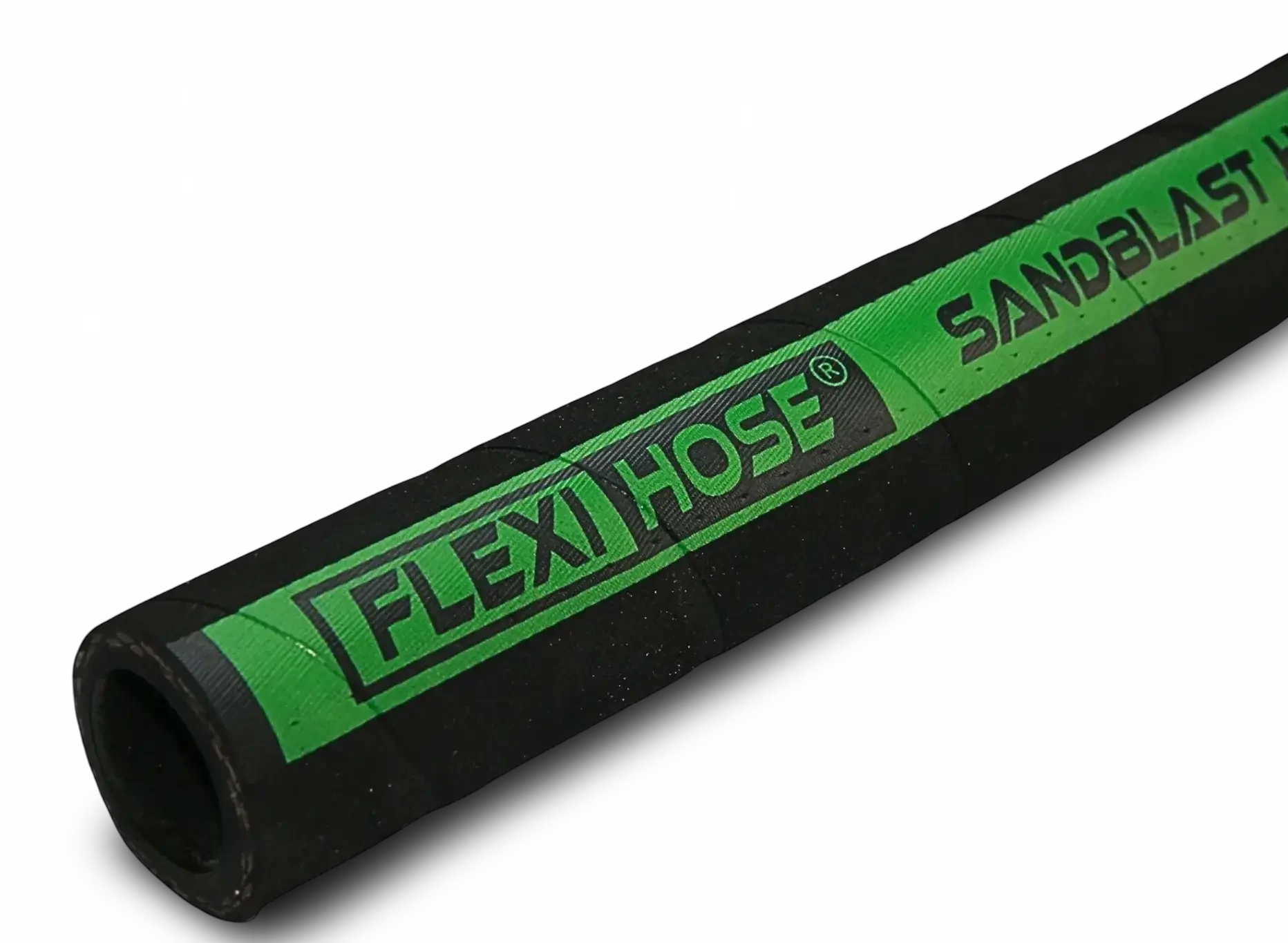
Where the abrasive is propelled under air pressure rather than conveyed in bulk.
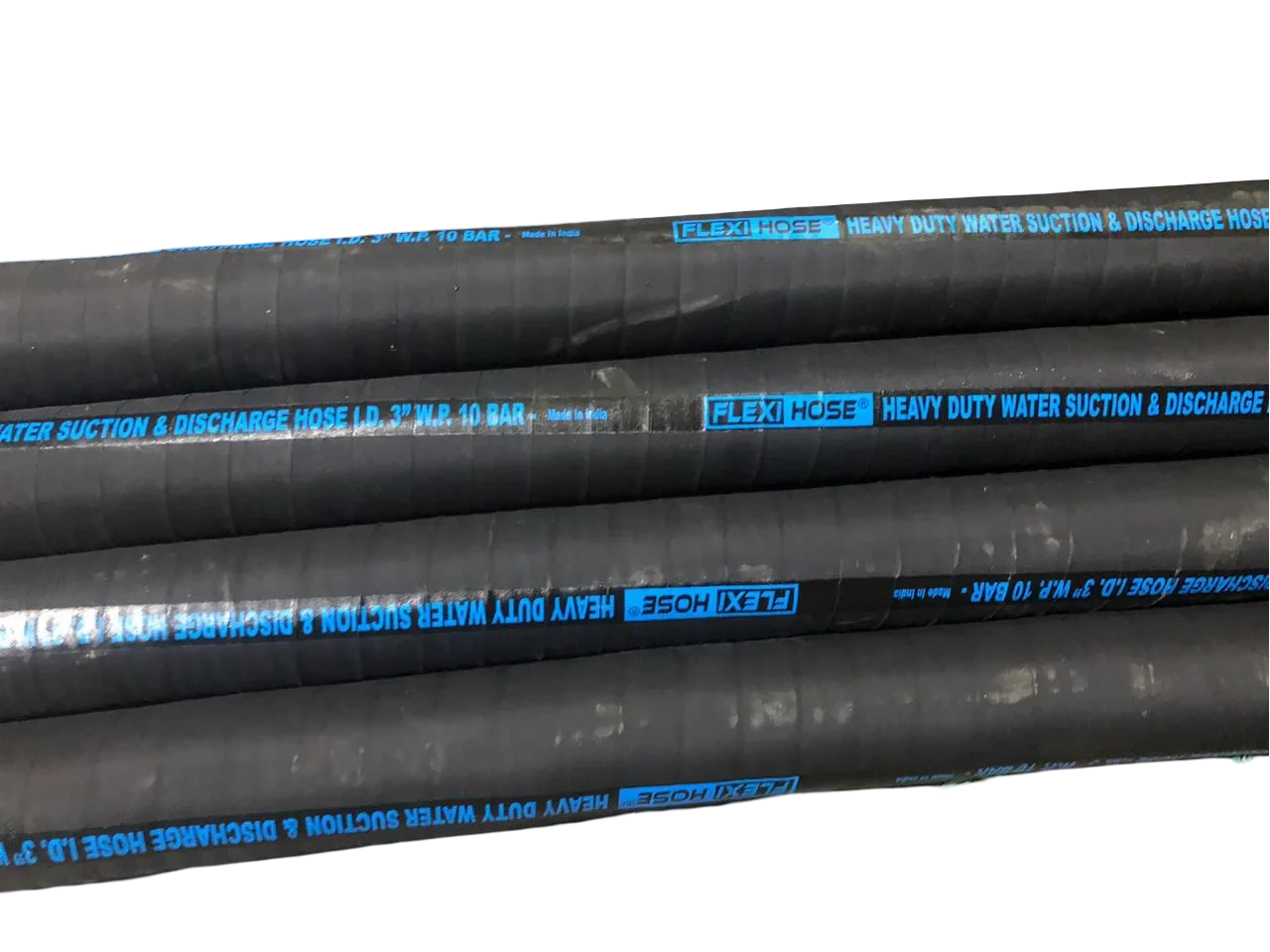
Dewatering and water transfer on the same sites, in the same large bore family.
Fly Ash Hose Bore, Pressure and Coil Length Table — All 10 Sizes
Working pressure is 10 bar / 150 psi at every catalogued bore. Test pressure is 1.5 times working pressure and burst pressure is three times working pressure. Maximum coil length shortens as bore increases.
| Nominal bore (inch) | Working pressure (bar) | Working pressure (psi) | Test pressure (bar) | Burst pressure (bar) | Max coil length (m) |
|---|---|---|---|---|---|
| 2 inch | 10 | 150 | 15 | 30 | 20 |
| 2.1/2 inch | 10 | 150 | 15 | 30 | 20 |
| 3 inch | 10 | 150 | 15 | 30 | 20 |
| 4 inch | 10 | 150 | 15 | 30 | 20 |
| 5 inch | 10 | 150 | 15 | 30 | 20 |
| 6 inch | 10 | 150 | 15 | 30 | 20 |
| 8 inch | 10 | 150 | 15 | 30 | 20 |
| 10 inch | 10 | 150 | 15 | 30 | 15 |
| 12 inch | 10 | 150 | 15 | 30 | 12 |
| 14 inch | 10 | 150 | 15 | 30 | 10 |
Bores larger than 14 inch are made to customer requirement. Test and burst figures above are derived from the catalogued rules printed against this product — test pressure 1.5 times working pressure, burst pressure three times working pressure — and not from an independent table. The fly ash hose is supplied with or without end connections as required. Coil length is the constraint that most often changes a layout: at 14 inch the maximum coil is 10 m, so a long run becomes several coupled lengths rather than one continuous hose.
How to Select a Fly Ash Hose
Media first, then pressure, then temperature, then bore and coil length. On abrasive duty the last step is the one that decides how long the hose lasts.
1. Confirm the media is abrasive and dry or slurried
This grade is catalogued for fly ash, dry cement, wet slurry and other abrasive media. If the medium is water, oil or a chemical, a different tube compound applies and a fly ash hose is the wrong product. Where the material is abrasive but the duty is loading and unloading rather than plant transfer, the bulk material grade is the closer match.
2. Design to 10 bar, not to the test figure
Working pressure is 10 bar / 150 psi at every bore. Test pressure of 15 bar and burst of 30 bar are proof and destructive figures respectively; neither is an operating allowance. On a pneumatic conveying line the number to check is the blower discharge pressure including any surge on start-up.
3. Check the temperature at the discharge, not the silo
Service range is −30 °C to +70 °C. Fly ash taken directly from a precipitator can arrive hotter than the silo figure, and cement leaving a mill is warm. Take the temperature at the point the hose actually sees it, which is usually the discharge rather than storage.
4. Match bore to conveying velocity
Ten bores are catalogued from 2 inch to 14 inch, and bores above 14 inch are made to requirement. Under-sizing the bore raises velocity, and velocity is what wears an abrasive line out. A bore chosen for pressure drop alone will usually be one size too small for hose life.
5. Plan the run around the coil length
Maximum coil is 20 m up to 8 inch, then 15 m at 10 inch, 12 m at 12 inch and 10 m at 14 inch. A 30 m run at 12 inch is three coupled lengths, not one hose. Confirming this before the layout is fixed avoids a redesign after the container lands.
6. State whether you want end connections fitted
The fly ash hose is supplied with or without end connections as required. Cement plant couplings are rarely generic, so the coupling type, size and any camlock or flange standard should travel with the enquiry rather than being agreed after the quotation.
Where Fly Ash Hose Is Used in Saudi Arabia
Saudi Arabia is one of the largest cement producers in the Gulf, and every position below sits inside that industry or the construction programme it feeds.
Cement plant loading and silo transfer
The producers around Riyadh, Hail, Jazan and the Eastern Province move cement between mills, silos and bulk tankers continuously. A fly ash hose is the flexible element in those connections, where a rigid line cannot accommodate the movement between a fixed silo spout and a road tanker.
Power station ash handling
Fly ash is a by-product of coal and heavy fuel firing, and it has to be collected, conveyed and either disposed of or sold into cement. Saudi generating plant and the captive power attached to industrial cities use large bore fly ash hose in exactly this position, usually in the 8 inch to 14 inch sizes.
Ready mix and batching plants
The construction programme across Riyadh, NEOM, the Red Sea projects and Qiddiya runs on batching plants that take cement in by tanker and discharge it pneumatically. These sites buy the 3 inch to 6 inch bores, and they buy them repeatedly, because a batching plant hose is a consumable rather than a fixture.
Bulk tanker discharge at port
Cement and clinker move through Dammam, Jeddah and Jubail in bulk. Discharge from vessel to shore silo and from silo to road tanker is a hose connection at both ends, and the abrasion is highest where the material changes direction.
Mining and quarry material handling
Gypsum, limestone and phosphate operations feeding the Saudi cement and fertiliser industries handle the same class of abrasive powder. The corrugated cover matters here because the hose is dragged across rock and steel rather than laid on a floor.
Slurry and wet abrasive transfer
The catalogue lists wet slurry alongside dry powder for this grade. Concrete washout, slurry return lines and drilling waste transfer on Saudi construction sites all fall inside that description, and the helix wire is what allows the same hose to be used on suction as well as discharge.
Why Buy Fly Ash Hose Direct from the Manufacturer
Vardhman Hydraulic Hoses Pvt. Ltd. has manufactured under the FLEXI HOSE® brand since 1980, from a single plant at Bhiwadi, Rajasthan.
Factory direct, no trading layer
You buy from the plant that mixes the compound and builds the hose. That means the specification you are quoted is the specification that is manufactured, and a technical question is answered by the people who made the product rather than by a reseller.
The abrasion resistance is compounded, not claimed
On a fly ash hose the tube compound is the product. Mixing the highly abrasion resistant NR blend on site means the wear surface is formulated and tested in the same building where the hose is built, rather than bought in as a generic liner sheet.
Bores to 14 inch and beyond on request
The fly ash hose is catalogued in ten bores from 2 inch to 14 inch, and larger sizes are made to customer requirement. Suppliers working from stock usually stop at 8 inch, which is the point at which a cement or ash handling project has to change its layout to suit the hose rather than the reverse.
Ends fitted to your coupling standard
Hose is supplied with or without end connections as required. Because cement plant couplings vary by builder and by decade, having them fitted and tested at the factory removes the on-site fabrication that a bare-ended coil would otherwise need.
Complete export document set
Every shipment carries a commercial invoice, packing list, certificate of origin, bill of lading and test certificates. Terms are FOB, CIF or CFR ex Nhava Sheva (JNPT) or Mundra Port, so customs clearance at the Saudi port is not held up on paperwork.
Four Product Families, 26 Catalogued Products
The abrasive transfer grade sits inside a full catalogue exported from one plant, so a mixed order ships as one consignment.

Air, water, steam, sand blast, rock drill, cable coolant and UHMWPE grades.
- Air Hose Type 1 & Type 2
- Steam Hose, 1 and 2 wire braid
- Sand Blast Hose

SAE 100 R1, R2, R3 and R6 plus EN 856 four spiral grades.
- SAE 100 R1 AT and R2 AT
- SAE 100 R3 and R6
- EN 856 4SP / 4SH
The 10 bar large bore series for water, oil and solids.
- Water Suction & Discharge
- Oil Suction & Discharge
- Bulk Material and Lay Flat
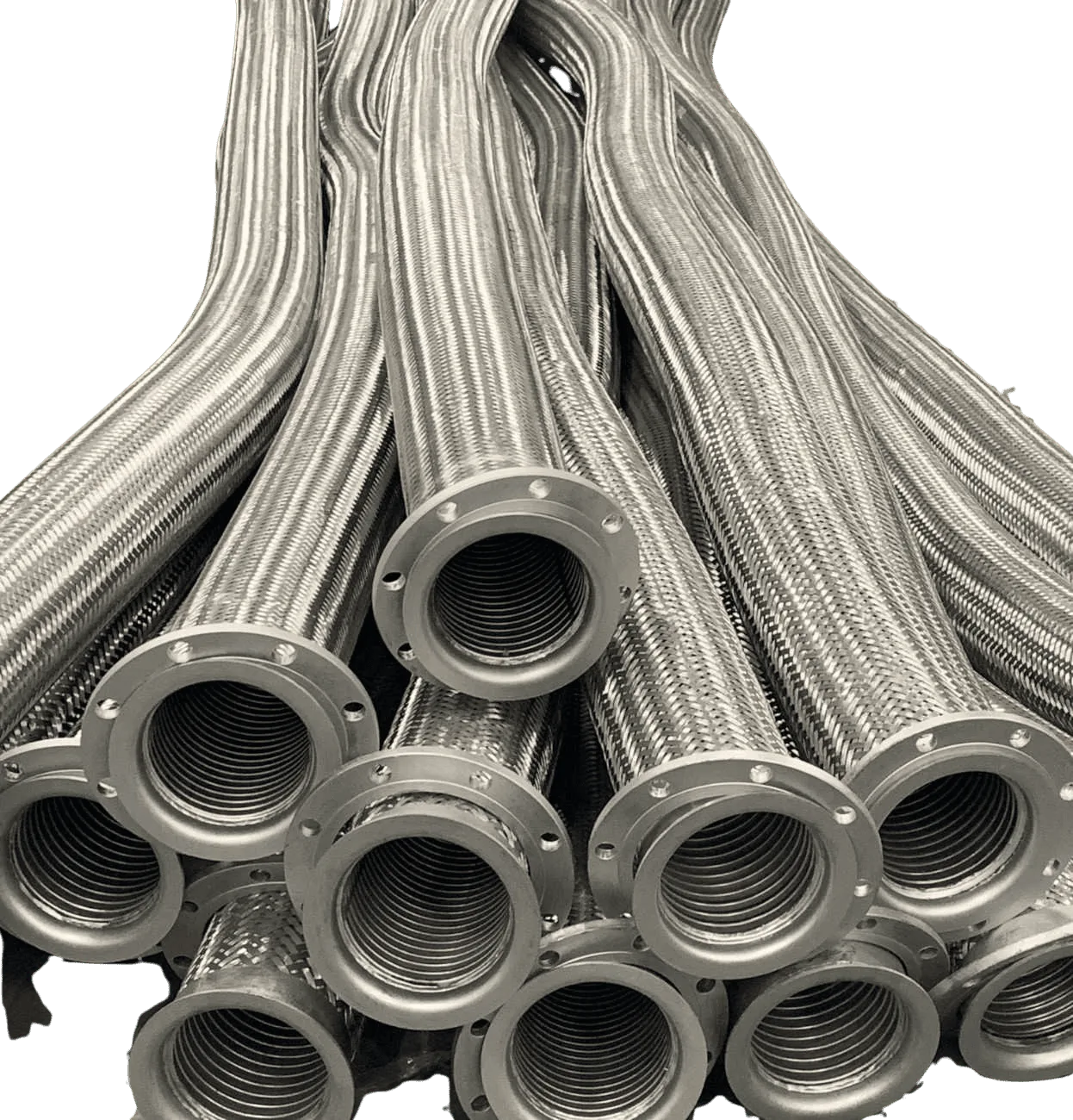
Corrugated stainless steel, PTFE lined hose and insulating matting.
- SS Flexible Hose, EN ISO 10380
- SS PTFE Teflon Hose
- Electrical Insulating Mat
Request a Fly Ash Hose Quotation for Saudi Arabia
Send bore, required length, whether end connections are to be fitted, the coupling standard, the media and your discharge port. A quotation with specification, test certificate scope and transit window follows on the same working day wherever possible. Price on request — we do not publish list pricing.
People Also Ask
Short answers to the questions Saudi cement, power and construction buyers search for most often.
What is a fly ash hose used for?
Suction and discharge of fly ash, dry cement, wet slurry and other abrasive media at cement plants and construction sites. Typical positions are silo to tanker transfer, batching plant charging, power station ash handling and bulk discharge at port.
What pressure does a fly ash hose hold?
10 bar / 150 psi working pressure at every catalogued bore from 2 inch to 14 inch. Test pressure is 1.5 times working pressure and burst pressure is three times working pressure, which gives 15 bar and 30 bar respectively.
Why does it need a helix wire?
Because the same line is often used on suction as well as discharge. Without an embedded steel helix the hose would collapse under negative pressure. The helix also holds the bore open when the hose is dragged or bent on site.
What is the largest bore available?
Fourteen inch is the largest catalogued bore, at a maximum coil length of 10 m. Sizes above 14 inch are made to customer requirement rather than held as a standard, so they should be raised at enquiry stage rather than assumed.
How long are the coils?
Maximum coil length is 20 m for bores up to 8 inch, 15 m at 10 inch, 12 m at 12 inch and 10 m at 14 inch. Longer runs are made up from coupled lengths, which is why the coupling standard matters as much as the bore.
Can it handle wet slurry as well as dry powder?
Yes. The catalogue lists fly ash, dry cement, wet slurry and other abrasive media together for this grade. The tube is a highly abrasion resistant NR rubber blend, which is chosen for particle wear rather than for a specific moisture content.
Fly Ash Hose — Frequently Asked Questions
Specification, construction and export questions, answered from the FLEXI HOSE® catalogue.
The tube is a smooth black NR rubber blend that is highly abrasion resistant. Reinforcement is high tensile synthetic plies with an embedded helix wire, and the cover is black SBR rubber, weather and abrasion resistant, with a corrugated wrap finish. The helix is what allows the hose to be used on suction as well as discharge.
Ten bores: 2, 2.1/2, 3, 4, 5, 6, 8, 10, 12 and 14 inch. Bores larger than 14 inch are produced to customer requirement rather than held as a catalogue size, so a project needing more than 14 inch should raise it with the first enquiry.
10 bar, equivalent to 150 psi, at every catalogued bore from 2 inch to 14 inch. Unlike the hydraulic grades, the rating does not fall as the bore increases, because this is a conveying line rather than a pressure line.
The catalogue prints the rules rather than a separate table: test pressure is 1.5 times working pressure and burst pressure is three times working pressure. At 10 bar working that gives 15 bar test and 30 bar burst across the range.
−30 °C to +70 °C. On ash handling the number to check is the material temperature at the point the hose picks it up, since fly ash taken straight from a precipitator can be considerably hotter than the same material after it has been stored.
The catalogue describes this product as helix reinforced rather than printing a numeric vacuum figure against it, so no vacuum rating is published here. Where a stated vacuum figure is required, the bulk material and water suction grades in the same 10 bar series are catalogued at 0.9 bar.
Yes. The catalogue states that the hose is supplied with ends fitted with or without connections as required. Because cement plant couplings differ between builders, the coupling type and size should be stated on the enquiry so the assemblies arrive ready to fit.
Both are 10 bar abrasive grades in the same family. The dry cement and fly ash grade is specified around cement plant and construction site duty with helix reinforcement and bores to 14 inch; the bulk material grade covers loading and unloading of cement, fly ash, gravel and sand from 25 mm to 203 mm with a 0.9 bar vacuum rating.
No. Only three FLEXI HOSE products carry a BIS licence: Water Hose to IS 444-2017 Type 2 under CM/L 8400124510, and Air Hose Type 1 and Type 2 to IS 446-2017. No BIS or Indian Standard claim is made for the abrasive transfer grades.
Ex Nhava Sheva (JNPT) or Mundra Port on FOB, CIF or CFR terms, with sea transit of 7 to 9 days to Jeddah, 7 to 10 to Dammam and 8 to 10 to Jubail and Yanbu. Every shipment carries a commercial invoice, packing list, certificate of origin, bill of lading and test certificates.