

SAE 100 R3 Hose Supplier in Saudi Arabia — 4 Bore Sizes, Two Textile Braids
SAE 100 R3 is a medium pressure hydraulic hose reinforced with two braids of high tenacity textile yarn rather than steel wire. FLEXI HOSE® SAE 100 R3 hose is catalogued in four bores from 1/2 inch to 1 inch, rated 1000 PSI / 69 BAR down to 565 PSI / 39 BAR working pressure, with a service temperature of −40 °C to +100 °C.
Shipping outside India? See our full export capability from India — Incoterms, export documentation and port of dispatch.
What Is SAE 100 R3 Hose?
SAE 100 R3 is a hydraulic hose whose reinforcement is two braids of high tenacity textile yarn. That single construction choice separates it from the wire braided grades. Textile reinforcement gives a lighter, more flexible hose with a smaller bend radius, at a lower pressure rating than a comparable wire braid hose of the same bore.
The FLEXI HOSE® construction is a black oil resistant synthetic rubber lining, two braids of high tenacity textile yarn, and a synthetic rubber cover resistant to weather, ageing and abrasion. The catalogued application is hydraulic systems with petroleum or water based fluid, and fuel and lubricating oils. Service temperature is −40 °C to +100 °C.
The rating pattern across the four bores is worth reading before specifying. Every size in the SAE 100 R3 range carries a minimum burst pressure exactly four times its working pressure, from 1000 PSI working and 4000 PSI burst at 1/2 inch down to 565 PSI working and 2250 PSI burst at 1 inch. Where the circuit needs more pressure than the textile construction offers, the wire braided SAE 100 R1 and SAE 100 R2 grades take over, and the full hydraulic range sits on the Saudi hydraulic hoses page.
On This Page
Jump straight to the SAE 100 R3 information you need.
SAE 100 R3 in the FLEXI HOSE® Hydraulic Ladder
Five hydraulic grades are exported to Saudi Arabia, arranged by reinforcement rather than by bore. The two textile braid grade sits between the single textile braid R6 and the wire braided R1. Every figure below is taken verbatim from the FLEXI HOSE® catalogue.
The grade covered on this page. Medium pressure, flexible, for hydraulic systems with petroleum or water based fluid and for fuel and lubricating oils.

One braid instead of two. Lower pressure, greater flexibility, for low pressure hydraulic oils, fuels, lubricating oil, anti-freeze solution and water.

The first wire braided grade. Steel reinforcement lifts the working pressure well above what a textile braid can carry at the same bore.

Two wire braids for high pressure service. The standard specification on mobile hydraulic equipment across the Kingdom.

Four spiral layers for the highest pressures in the range, used on heavy mobile plant and impulse-heavy circuits.
SAE 100 R3 Size and Pressure Table
All four catalogued bores. PSI and BAR pairs are published exactly as printed in the FLEXI HOSE® catalogue and are not converted or recalculated.
| Nominal bore (inch) | Nominal bore (mm) | Mean O.D. (mm) | Working pressure (PSI) | Working pressure (BAR) | Min. burst (PSI) | Min. burst (BAR) |
|---|---|---|---|---|---|---|
| 1/2 inch | 12.50 | 23.00 | 1000 | 69 | 4000 | 276 |
| 5/8 inch | 15.90 | 27.00 | 875 | 60 | 3500 | 241 |
| 3/4 inch | 20.00 | 32.00 | 750 | 52 | 3000 | 207 |
| 1 inch | 25.00 | 38.00 | 565 | 39 | 2250 | 155 |
Construction: black oil resistant synthetic rubber lining; two braids of high tenacity textile yarn; synthetic rubber cover resistant to weather, ageing and abrasion. Service temperature −40 °C to +100 °C. Minimum burst pressure is exactly four times working pressure on every bore of this SAE 100 R3 range, so the safety margin does not change as bore increases. Working pressure does fall as bore rises, which is normal for braided hose — the reinforcement carries more hoop stress at a larger diameter for the same internal pressure.
How to Select Between SAE 100 R3 and the Wire Braided Grades
Four checks, in this order. The first one eliminates most wrong specifications before the others matter.
1. Check the circuit working pressure
This decides the grade. SAE 100 R3 covers 1000 PSI / 69 BAR at 1/2 inch down to 565 PSI / 39 BAR at 1 inch. If the circuit runs above the figure for your bore, move to the wire braided R1 or R2 grade. Textile reinforcement cannot be substituted for steel by adding wall thickness, and a hose selected on bore alone rather than on rated pressure is the most common failure we see.
2. Check pressure surges, not just steady pressure
Published working pressure assumes a reasonably steady circuit. Directional valve closure, cylinder end-stops and fast load reversal all produce spikes well above the gauge reading. The four to one burst margin gives headroom, but a circuit with heavy impulse duty belongs on a wire braided or spiral grade rather than on textile braids.
3. Check routing and bend radius
This is where the textile grade earns its place. Two yarn braids are far more flexible than two wire braids, so an SAE 100 R3 hose routes through tight machine frames and around obstructions without kinking or needing extra elbow fittings. On return and case drain lines that flexibility is often worth more than the pressure a wire braid would add.
4. Check fluid and temperature
The catalogued application covers hydraulic systems with petroleum or water based fluid, and fuel and lubricating oils. Service temperature is −40 °C to +100 °C, which is generous at both ends for Saudi conditions. Confirm the fluid temperature at the hose, which on a return line can sit well above tank temperature.
Where SAE 100 R3 Hose Is Used in Saudi Arabia
The textile braid grade earns its place on the lower pressure legs of circuits that use wire braid elsewhere.
Return and case drain lines
On mobile plant and fixed power packs the pressure leg runs R2 or spiral hose while the return leg sees a fraction of that pressure. Fitting a wire braided hose on a return line adds weight, cost and routing difficulty for no benefit. This is the single largest duty for the grade across the Kingdom.
Fuel and lubricating oil lines
The catalogued application explicitly includes fuel and lubricating oils. Workshop lube reels, engine fuel supply and return runs on generator sets, and oil transfer on fixed plant all sit inside the rated envelope for the smaller bores.
Agricultural and irrigation machinery
Farms in Al-Kharj, Qassim, Tabuk and Hail run pivot systems, tractors and implements whose auxiliary circuits are low pressure. Flexibility and repairability matter more than headline pressure on equipment that is maintained in the field rather than in a workshop.
Workshop and service equipment
Presses, jacks, tyre changers, lifts and test rigs in fleet workshops across Riyadh, Dammam and Jeddah use hydraulic circuits that rarely approach wire braid pressures. A lighter hose is easier to route inside a machine frame and easier to replace in situ.
Water based fluid systems
The catalogued application covers water based hydraulic fluid as well as petroleum. Where a plant has moved to a water glycol or high water content fluid for fire safety reasons, the SAE 100 R3 grade remains within specification.
Distributor shelf stock
Four bores in one grade is a small stockholding that covers a wide range of low and medium pressure repair jobs. Saudi distributors typically pair it with R1 and R2 so a workshop can be served from one counter rather than sent to a second supplier.
Why Buy SAE 100 R3 Hose Direct from the Manufacturer
Vardhman Hydraulic Hoses Pvt. Ltd. has manufactured under the FLEXI HOSE® brand since 1980, from a single plant at Bhiwadi, Rajasthan.
Factory direct, no trading layer
You buy from the plant that mixes the compound and builds the hose. That means the specification you are quoted is the specification that is manufactured, and a technical question is answered by the people who made the product rather than by a reseller.
The full SAE ladder from one plant
R1, R2, R3, R6 and EN 856 four spiral are all built here. A Saudi distributor stocking SAE 100 R3 alongside the wire braided grades buys them on one order, one invoice and one container, and gets consistent fitting compatibility across the range.
Braiding controlled in house
Textile braid angle and tension are what set the pressure rating of this construction.
Impulse and burst testing on site
An in-house R&D laboratory runs pressure and burst testing with equipment calibrated by NABL-accredited bodies. For a hydraulic grade that number is the whole product, so a distributor can hand a plant engineer a certificate rather than a claim.
Complete export document set
Every shipment carries a commercial invoice, packing list, certificate of origin, bill of lading and test certificates. Terms are FOB, CIF or CFR ex Nhava Sheva (JNPT) or Mundra Port, so customs clearance at the Saudi port is not held up on paperwork.
Delivery, Ports and Transit to Saudi Arabia
Shipped ex Nhava Sheva (JNPT) or Mundra Port on FOB, CIF or CFR terms. Transit times below are sea transit and exclude clearance.
| Saudi port | Serves | Transit (days) |
|---|---|---|
| Dammam | Eastern Province workshops, Riyadh onward haulage | 7–10 |
| Jeddah | Western Region, Makkah, Red Sea projects | 7–9 |
| Jubail | Jubail Industrial City, fixed plant maintenance | 8–10 |
| Yanbu | Yanbu Industrial City, Red Sea refining | 8–10 |
| Riyadh | Inland via Dammam, dry port clearance | 9–12 |
| NEOM / Tabuk | North-west projects, Duba onward | 10–14 |
Saudi port operations are administered by Mawani, the Saudi Ports Authority. The SAE J517 specification family this grade is built to is published by SAE International. Hydraulic hose is consumed on a replacement cycle rather than a project cycle, so distributors usually order SAE 100 R3 as part of a standing quarterly replenishment across the whole ladder.
Four Product Families, 26 Catalogued Products
The textile braided hydraulic grade sits inside a full range exported from one plant, so a mixed order ships as one consignment.

Air, water, steam, sand blast, rock drill, cable coolant and UHMWPE grades.
- Air Hose Type 1 & Type 2
- Steam Hose, 1 and 2 wire braid
- Sand Blast Hose
The full SAE ladder plus EN 856 four spiral grades.
- SAE 100 R3 and R6
- SAE 100 R1 AT and R2 AT
- EN 856 4SP / 4SH
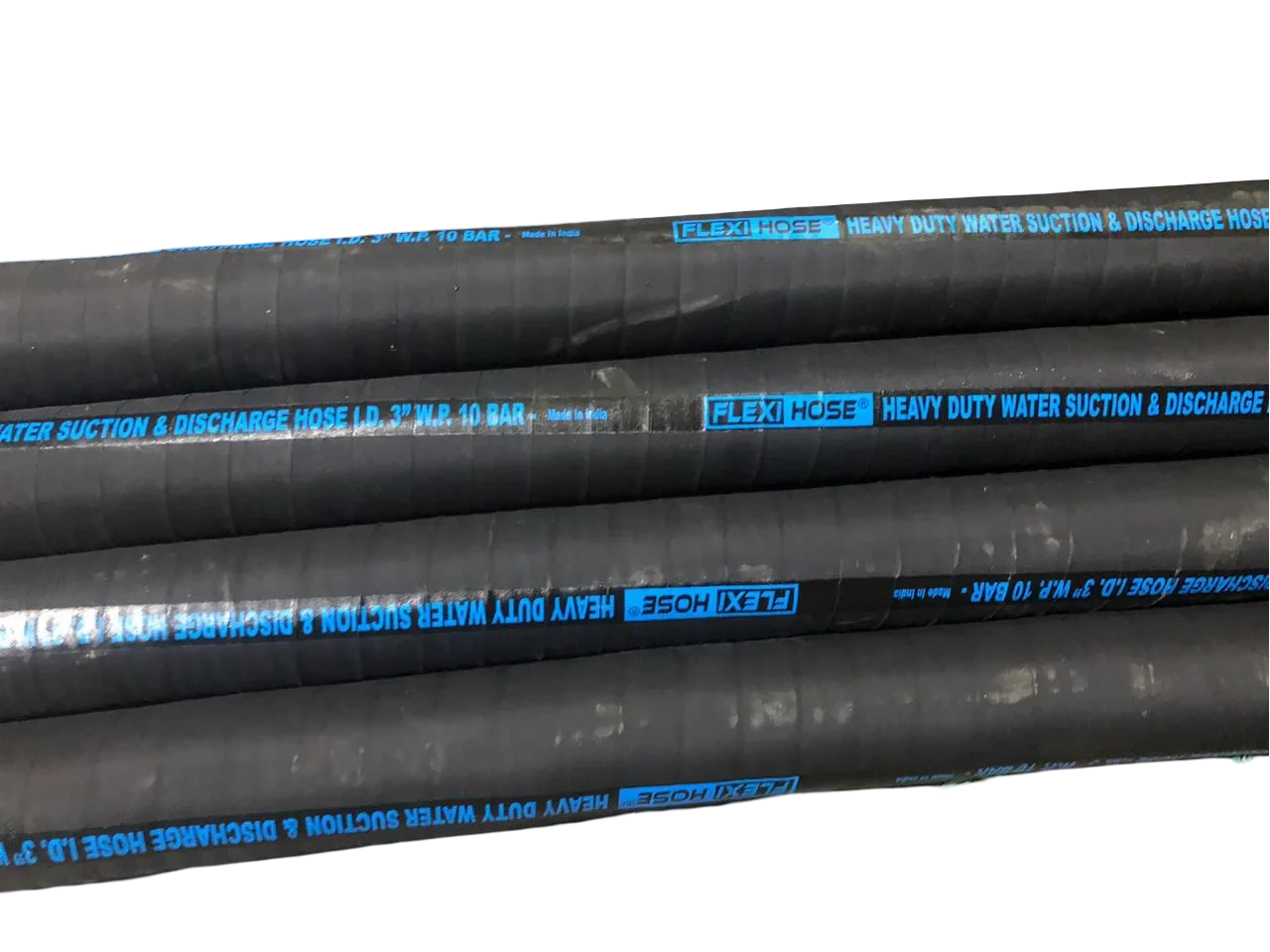
The 10 bar large bore series for water, oil and solids.
- Water Suction & Discharge
- Oil Suction & Discharge
- Bulk Material and Lay Flat
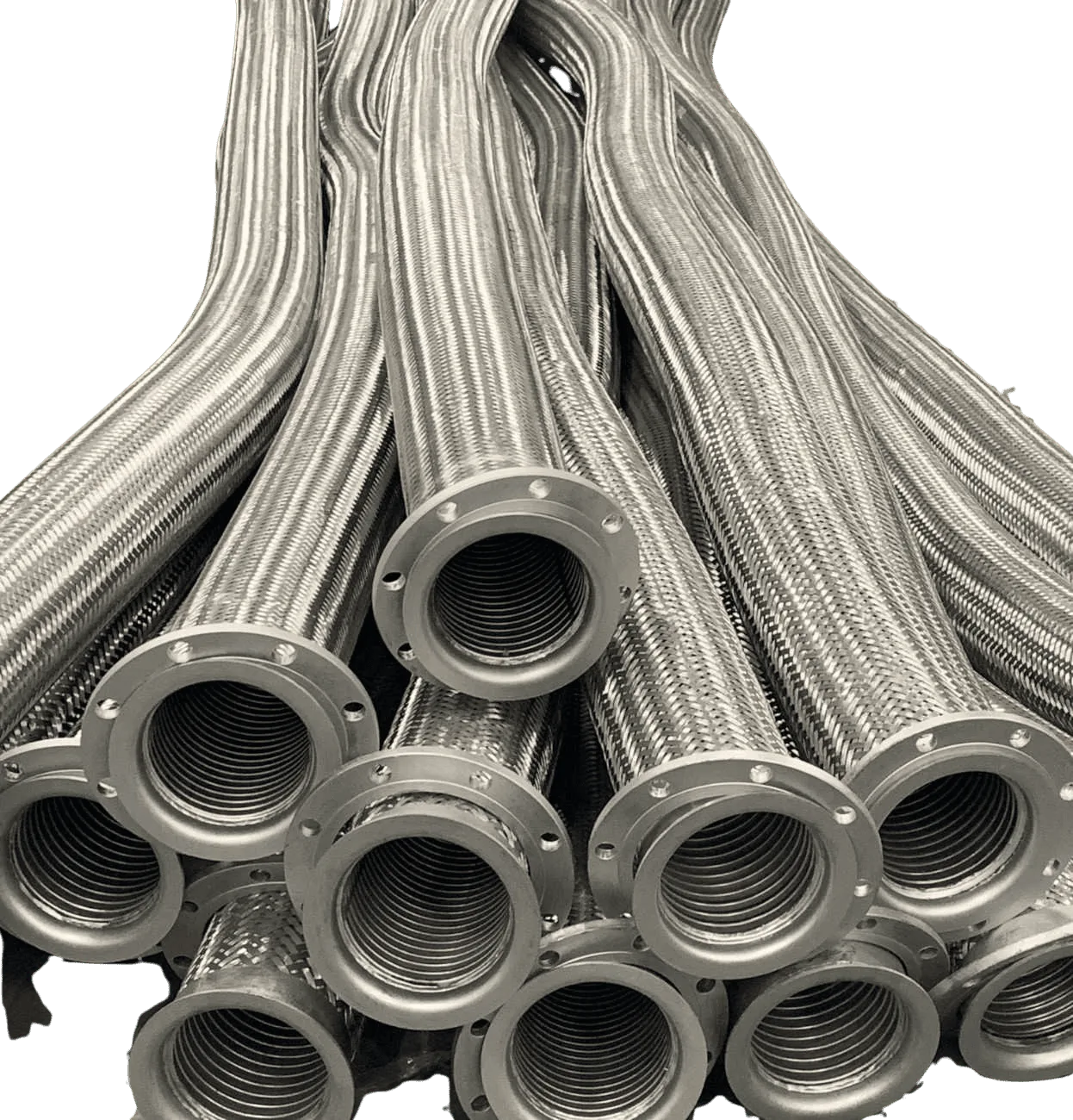
Corrugated stainless steel, PTFE lined hose and insulating matting.
- SS Flexible Hose, EN ISO 10380
- SS PTFE Teflon Hose
- Electrical Insulating Mat
Request an SAE 100 R3 Hose Quotation for Saudi Arabia
Send bore, quantity in metres, the circuit working pressure and your discharge port. A quotation with specification, test certificate scope and transit window follows on the same working day wherever possible. Price on request — we do not publish list pricing.
People Also Ask
Short answers to the questions Saudi hydraulic buyers search for most often.
What does SAE 100 R3 mean?
It is a hydraulic hose type designation from the SAE J517 specification family. The R3 type is defined by two braids of high tenacity textile yarn as the reinforcement, which places it below the wire braided R1 and R2 types and above the single textile braid R6 type on pressure.
What is the maximum working pressure of SAE 100 R3 hose?
1000 PSI / 69 BAR at the 1/2 inch bore, falling to 875 PSI / 60 BAR at 5/8 inch, 750 PSI / 52 BAR at 3/4 inch and 565 PSI / 39 BAR at 1 inch. Minimum burst pressure is four times working pressure at every size.
What is the difference between R3 and R6 hose?
Braid count. R3 carries two braids of textile yarn, R6 carries one. That gives R3 roughly two and a half times the working pressure at the same bore — 1000 PSI against 400 PSI at 1/2 inch — while R6 is the more flexible of the two.
Can textile braided hose replace wire braided hose?
Only where the rated pressure allows it. Textile reinforcement is lighter and more flexible but carries substantially less pressure than steel at the same bore. On a pressure leg running above the catalogued figure the wire braided R1 or R2 grade is required.
What fluids can the hose carry?
The catalogued application is hydraulic systems with petroleum or water based fluid, and fuel and lubricating oils. The lining is a black oil resistant synthetic rubber compound, so both mineral oil and water based hydraulic fluid are within specification.
What bore sizes are available?
Four: 1/2 inch (12.50 mm), 5/8 inch (15.90 mm), 3/4 inch (20.00 mm) and 1 inch (25.00 mm), with mean outside diameters of 23.00, 27.00, 32.00 and 38.00 mm respectively.
SAE 100 R3 Hose — Frequently Asked Questions
Specification, selection and export questions, answered from the FLEXI HOSE® catalogue.
Three layers. A black oil resistant synthetic rubber lining, two braids of high tenacity textile yarn as reinforcement, and a synthetic rubber cover resistant to weather, ageing and abrasion. There is no steel in the reinforcement, which is what makes the hose lighter and more flexible than a wire braided grade.
Minimum burst pressure is 4000 PSI / 276 BAR at 1/2 inch, 3500 PSI / 241 BAR at 5/8 inch, 3000 PSI / 207 BAR at 3/4 inch and 2250 PSI / 155 BAR at 1 inch. Each figure is exactly four times the working pressure for that bore.
−40 °C to +100 °C, the same band as the R1, R2 and R6 grades. That covers Saudi ambient conditions with a wide margin at both ends. Fluid temperature at the hose should be checked separately, particularly on return lines where oil can run hotter than tank temperature.
On low and medium pressure legs where flexibility matters: return lines, case drains, fuel and lubricating oil runs, and auxiliary circuits on agricultural and workshop equipment. Fitting a wire braided hose in those positions adds weight and routing difficulty without adding useful capability.
Yes. The catalogued application covers hydraulic systems with petroleum or water based fluid. Plants that have moved to water glycol or high water content fluids for fire safety reasons can continue to use this grade within its rated pressure for the bore.
Because hoop stress in the reinforcement rises with diameter for the same internal pressure. A larger bore presents more area for the fluid to act on, so the same braid construction holds less pressure. The pattern is normal across all braided hydraulic hose and is not specific to this grade.
The catalogue lists hose. Fittings and crimped assemblies are handled as a separate line on the quotation, so state the end connection standard you use — JIC, BSP, ORFS or a machine specific pattern — and the assembly lengths required when you send the enquiry.
Pressure and burst testing is carried out in an in-house R&D laboratory using equipment calibrated by NABL-accredited bodies. Batch test certificates ship with the consignment alongside the commercial invoice, packing list, certificate of origin and bill of lading.
Yes, and most distributors do. R1, R2, R3, R6 and EN 856 four spiral are all manufactured in the same plant, so a mixed hydraulic order ships as one consignment with one set of export documents rather than as separate shipments from separate suppliers.
Sea transit from Nhava Sheva or Mundra runs 7 to 10 days to Dammam, 7 to 9 to Jeddah, 8 to 10 to Jubail and Yanbu, 9 to 12 to Riyadh via Dammam and 10 to 14 to NEOM and Tabuk. Those windows exclude customs clearance and inland haulage.
Vardhman Hydraulic Hoses Pvt. Ltd., manufacturing under the FLEXI HOSE brand since 1980 from F-621, Phase-1, RIICO Industrial Area, Bhiwadi 301019, Rajasthan, India.