
Sand Blast Hose Supplier in Saudi Arabia, Exceeds IS 5894
Abrasive blast hose with an extra-thick filler-free rubber lining, high-tenacity synthetic yarn braid and an abrasion-resistant cover. Six bores from 1/2″ to 2″ (12.00 to 50.00 mm), all at 175 PSI / 12 BAR. Made at our own works in Bhiwadi, India and shipped to Saudi Arabia from Nhava Sheva (JNPT) and Mundra.
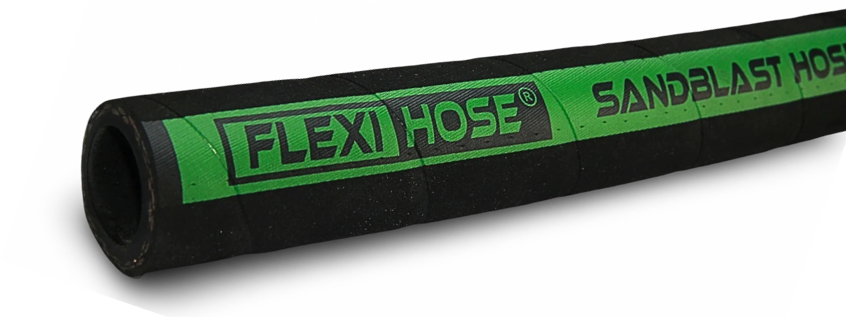
What a sand blast hose is
A sand blast hose carries abrasive under compressed air to a blast nozzle. This one exceeds IS 5894, in six bores from 1/2″ to 2″ (12.00 to 50.00 mm).
Every bore carries the same ratings: 175 PSI / 12 BAR working pressure, 700 PSI / 48 BAR minimum burst, and a service band of −40 C to +75 C.
The wall is built for wear, not pressure. An extra-thick seamless rubber lining free from mineral filler, single/double high-tenacity synthetic yarn braids, and a cover resistant to abrasion, ozone and weather. DIN abrasion loss is < 60 mm³.
It exceeds IS 5894 and holds no BIS licence. We do not describe it as certified, compliant or conforming.
How it is built
A blast hose is a wear part. The wall is built to survive abrasive moving at velocity, not to hold high pressure, which is why the burst margin is narrower than a steam hose and the lining is thicker than anything else in the range.
Lining
Extra-thick seamless rubber, free from mineral filler. Mineral filler is what makes a cheap lining wear through in weeks: it gives the abrasive something to tear out.
Reinforcement
Single/double high-tenacity synthetic yarn braids. Textile rather than wire, which is what keeps the hose flexible enough to drag around a job.
Cover
Rubber compound highly resistant to abrasion, ozone and weather, for a hose that lives outdoors. DIN abrasion loss is < 60 mm³.
- 1Tubeextra-thick seamless rubber lining, free from mineral filler
- 2Reinforcementsingle/double high-tenacity synthetic yarn braids
- 3Coverrubber compound highly resistant to abrasion, ozone and weather
Specification table
Every figure is transcribed from the FLEXI HOSE Product Catalogue 2026-2027. PSI and BAR are the catalogue's own printed pairs and are not converted. Working pressure and minimum burst pressure are constant across every bore. The mean outside diameter is the figure your coupling has to match, which is why it is published for every size.
Sand blast hose, braided, Exceeds IS 5894
| Bore (in) | Bore (mm) | Mean O.D. (mm) | WP (PSI) | WP (BAR) | Burst, min. (PSI) | Burst, min. (BAR) |
|---|---|---|---|---|---|---|
| 1/2″ | 12.00 | 27.00 | 175 | 12 | 700 | 48 |
| 3/4″ | 20.00 | 33.00 | 175 | 12 | 700 | 48 |
| 1″ | 25.00 | 39.00 | 175 | 12 | 700 | 48 |
| 1-1/4″ | 31.00 | 48.00 | 175 | 12 | 700 | 48 |
| 1-1/2″ | 38.00 | 54.00 | 175 | 12 | 700 | 48 |
| 2″ | 50.00 | 70.00 | 175 | 12 | 700 | 48 |
Six bores. Coil and cut lengths are not printed in the catalogue for this grade, so we publish none. Tell us the length and the end fittings you need.
Choosing a bore
Blast hose bore is chosen from the nozzle, not from the compressor. The working rule in the trade is a hose bore around three to four times the nozzle orifice, so that the abrasive keeps velocity without the hose choking the air supply. Undersize it and you lose production; oversize it and you are dragging weight around for nothing.
We publish the bores and the mean outside diameters and leave the nozzle pairing to your blast engineer, because the right answer depends on your compressor, your abrasive and your hose run. Send us the nozzle size and the run length with your enquiry and we will tell you which of the six bores we would supply.
Couplings and fittings
Blast hose is coupled with nylon or brass blast couplings sized to the hose's mean outside diameter, which is the third column of the table above. The coupling has to match the outside diameter, not the bore, which is the single most common ordering error we see.
Where a hose is dragged across a deck or a scaffold all shift, a made-up assembly with the ends already fitted outlasts a field-assembled one. Tell us the bore, the run length and the coupling type you work to and we will supply it made up.
Blast operations also need a deadman control on the line. That is safety equipment rather than hose, and we do not supply it, but a blast hose specified without one is an incomplete order.
What this hose is not for
Published because the wrong hose in a blast or steam line is an injury, not an inconvenience. If your duty is in this list, say so and we will route you correctly or tell you we cannot help.
Not BIS licensed.
This grade exceeds IS 5894. It carries no CM/L number and may not be called certified, compliant or conforming.
Not rated above 175 PSI / 12 BAR.
Working pressure is constant across every bore. It does not rise with a smaller bore.
Not rated above +75 C.
The service band is −40 C to +75 C. This is a wear part, not a hot-service hose.
Not a static-dissipating or anti-spark hose.
The reinforcement is synthetic yarn braid. There is no conductive element in this grade, and we make no anti-static claim for it. If your duty requires a conductive blast hose, say so in your enquiry and we will tell you plainly whether we have one.
Not a steam, air or chemical hose.
A blast hose lining is built for abrasion, not for heat, oil or chemical attack. Different duty, different product.
Not the 10 BAR textile-ply blast hose.
The catalogue lists a second, different blast hose in the 10 BAR suction and discharge series. It is not this product and its figures do not apply here.
Where sand blast hose is used in Saudi Arabia
Saudi industry is concentrated where the Royal Commission put it. Jubail, Yanbu, Ras Al Khair and Jazan are administered industrial cities, and between them they account for more than 40 per cent of the Kingdom's non-oil exports. Jubail is refining and petrochemical on a scale that runs steam continuously. Yanbu sits on the Red Sea with the largest oil export port on that coast. Ras Al Khair is mining and metals. Blasting and steam service follow all three.
Refining and petrochemical
Steam tracing, lancing and vessel cleaning on the integrated complexes at Jubail and Yanbu.
Ports and marine
Hull preparation and coating removal at the Red Sea and Gulf ports.
Mining and metals
Surface preparation and steam service around the Ras Al Khair mining industries city.
Construction and infrastructure
Structural steel blasting on the Kingdom's giga-project and infrastructure programmes.
Desalination and power
Steam service on the coastal desalination and generation plants.
Fabrication and maintenance
Workshop blasting and plant steam across the Eastern Province industrial estates.
Shipping to Saudi Arabia
We ship from Nhava Sheva (JNPT) and Mundra on FOB, CIF and CFR terms. Transit below is time from sailing, not from order — add production time, which we confirm on the quotation.
- Jeddah Islamic Port 7 to 9 days
- King Abdulaziz Port, Dammam 7 to 10 days
- Jubail Commercial Port 8 to 10 days
- Yanbu Commercial Port 8 to 10 days
- Riyadh, via Dammam 9 to 12 days
- NEOM and Tabuk 10 to 14 days
These ranges are the company's own confirmed figures.
Documents and conformity
This is the part most enquiries actually turn on, so it is stated plainly rather than implied. Every consignment carries this document set.
- Commercial invoice
- Packing list
- Certificate of origin
- Bill of lading
- Test certificates
What we do and do not certify
Saudi customs clearance runs through the Kingdom's electronic conformity platform, which requires a product certificate and a per-shipment certificate for regulated goods. That process sits with the importer of record, not with us. What we supply is the document set every consignment carries, listed below, and the batch test reports your certification body will ask to see. We hold no Saudi conformity certificate and do not represent otherwise.
Getting a quotation for Saudi Arabia
Send the duty, not just the part number
Nozzle size, run length, abrasive, bore, quantity and coupling requirement.
Name the delivery port
Jeddah Islamic Port or whichever port you clear through. We quote FOB and CIF side by side so you can compare against a local stockist honestly.
Tell us the documentation you need
Batch test certificates, a specific certificate of origin format, or reports your conformity body will ask for. Asking at quotation stage is free; asking after dispatch is not.
Questions about sand blast hose for Saudi Arabia
What pressure does your sand blast hose take?
175 PSI / 12 BAR working pressure with a 700 PSI / 48 BAR minimum burst. Those figures are the same across every bore from 1/2″ to 2″ — they do not rise when the bore gets smaller.
What sizes do you make?
Six bores: 12.00, 20.00, 25.00, 31.00, 38.00 and 50.00 mm, which is 1/2″ to 2″. Mean outside diameters run 27.00 to 70.00 mm and are published for every size, because the blast coupling has to match the outside diameter rather than the bore.
What is the temperature range?
−40 C to +75 C. This is a wear part built for abrasion, not a hot-service hose. We publish no figure above +75 C for this grade.
Is the hose static conductive or anti-spark?
No. The reinforcement in this grade is high-tenacity synthetic yarn braid, and there is no conductive element in it. We make no anti-static or anti-spark claim for it. If your duty requires a conductive blast hose, say so in the enquiry and we will answer plainly whether we have one rather than reclassifying this hose to fit.
Which standard does it meet?
It exceeds IS 5894 and holds no BIS licence, so it is not certified, compliant or conforming.
How do I choose the bore for my nozzle?
The working rule in the trade is a hose bore around three to four times the nozzle orifice, so the abrasive keeps velocity without the hose choking the air supply. The right answer depends on your compressor, abrasive and run length, so send us the nozzle size and the run and we will say which of the six bores we would supply.
Do you supply to Saudi Arabia?
Yes. We ship from Nhava Sheva (JNPT) and Mundra on FOB, CIF and CFR terms, with Jeddah Islamic Port typically 7 to 9 days from sailing. Ranges for the other lanes we serve are in the shipping section above.
What makes the lining last longer?
Two things. It is extra-thick and it is free from mineral filler. Filler is what gives abrasive something to tear out of a cheap lining, which is why a filled hose wears through in weeks. DIN abrasion loss for this compound is < 60 mm³.
Can you fit blast couplings before dispatch?
Yes. Tell us the bore, the run length and the coupling type you work to and we supply the assembly made up. On a hose dragged across a deck or a scaffold every shift, a factory-made assembly outlasts a field-assembled one.
Do you supply the deadman control?
No. A deadman control is safety equipment rather than hose and we do not supply it. A blast hose specified without one is an incomplete order, so source it alongside the hose.
What documents come with the shipment?
Commercial invoice, packing list, bill of lading, certificate of origin, mill or batch test certificate, material safety data sheet where required, and a packing declaration. The full list is above. Certification required by your national conformity scheme sits with the importer of record.
What is the HS code for the shipment?
We do not publish an HS code, because classification is the importer's declaration and an error at your border is your cost. Our export desk states the code we invoice under on the quotation so your broker can confirm it against the current Saudi tariff schedule.
What length do the hoses come in?
The catalogue does not print a standard coil or cut length for this grade, so we do not publish one. Tell us the length and the end fittings you need and we will confirm what the works can supply.
How do I get a quotation?
Send the bore, quantity, coupling requirement and delivery port. WhatsApp is the fastest route. A quotation with an FOB and a CIF figure and a transit range for your port comes back the same working day in most cases.
Specifications on this page are transcribed from the FLEXI HOSE Product Catalogue 2026-2027. PSI and BAR are the catalogue's own printed pairs and are not converted. Last reviewed 10 September 2026.