
SS hose end fittings: the part that decides how the hose joins your line
A hose is only as good as its ends. They connect it to the line, carry the pressure load out of the braid, and decide whether it can be fitted without a twist.
Flexihose SS flexible hose pipe: annular corrugated, with or without braiding · tube AISI 304, 321, 316L · EN ISO 10380 · catalogue table, read as braided: 6 to 150 mm, 110 BAR working at 6 mm, 10 BAR at 150 mm
Quick answer
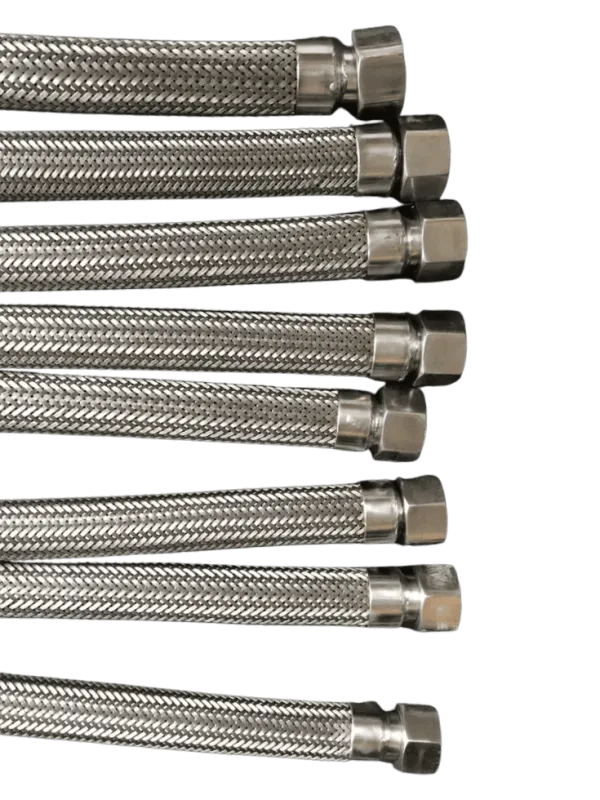
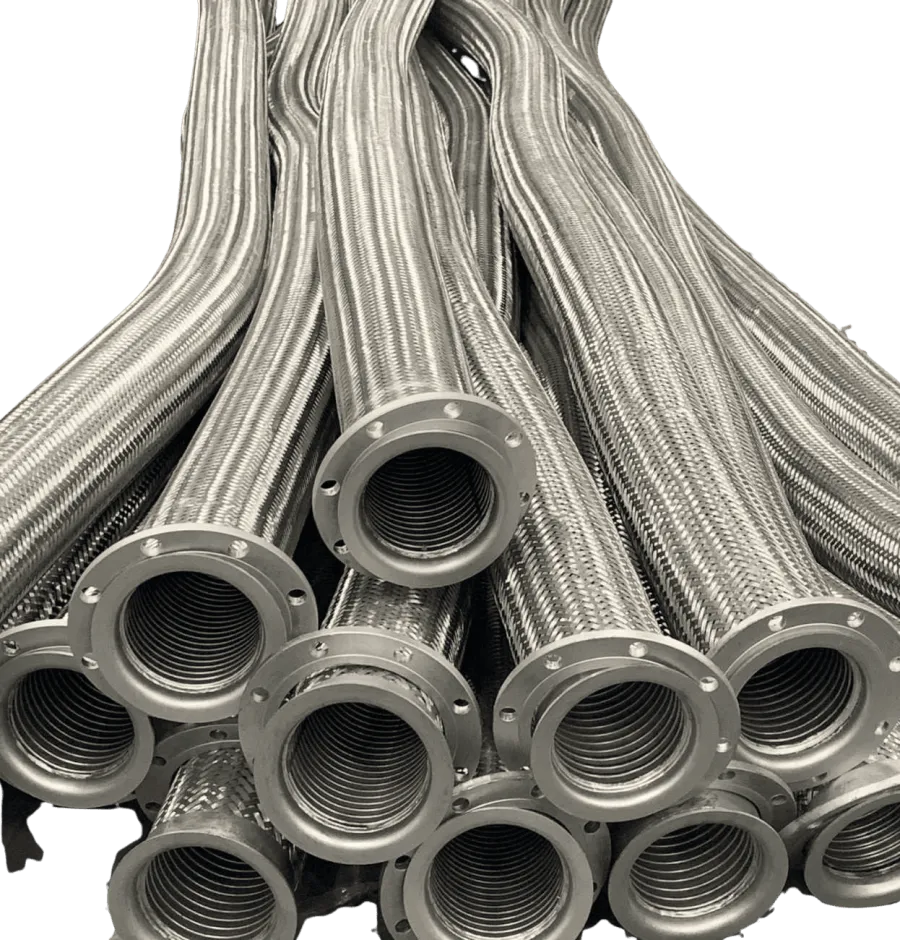
SS flexible hose ends come in four main types. Threaded ends suit screwed connections and small bores. Welded ends suit permanent joints. Flanges suit larger lines and lines that come apart for service. Swivel ends reduce the risk of twisting the hose during fitting. Our catalogue lists threaded ends and welded connections, with flanges and swivel fittings to customer specification.
When buyers compare SS flexible hose pipe, the ends are often the last thing on the enquiry, and often the reason for the second round of emails. This guide explains the four types, how to choose between them and exactly what to write down. One ISO reference for this area is ISO 10806, on fittings for corrugated metal hoses. The fitting standard for your job is whichever your line already uses.
The four end types compared
What each end suits, and what we need from you.
| End | Usually suits | Tell us | Watch out for |
|---|---|---|---|
| Threaded | Screwed pipework and equipment ports | Thread form and size, male or female | Twist during tightening |
| Welded | Permanent joints in process pipework | Size, schedule and end preparation | Heat and weld splatter on the braid |
| Flanged | Larger lines, and lines opened for service | Flange standard, class, size and whether fixed or loose | Aligning bolt holes by twisting the hose |
| Swivel | Reducing the risk of rotating the hose | Thread or seat type and size | Confirming the seat suits the medium |
Types from the FLEXI HOSE Product Catalogue 2026-2027, section 5.1: threaded ends, welded connections; flanges and swivel fittings to customer specification. Guidance is general practice.
The two ends do not have to match, so specify each one separately, for example a flange at the machine and a thread at the line.
Why the end joint matters more than it looks
On a braided hose the end joint is part of the pressure system. BOA Group’s metal hose guide describes the braid as a force-fit connection between the fittings at each end, absorbing the pressure reaction forces. If that joint is weak, the published pressure means little. Why the braid carries that load is explained in SS braided vs corrugated hose.
How the load travels through a braided assembly.
- PressurePushes on the ringsThe corrugated tube wants to extend under pressure.
- BraidResists itThe wire sleeve holds the two ends together.
- End jointPasses the load onThe braid is secured at the fitting, so the load moves into it.
- Your lineTakes the restThe fitting connects to pipework that must be anchored and supported.
How to choose an end fitting
Start with what is already on the line
Match what the hose will connect to. Changing the end is usually easier than changing the pipework.
Think about how it will be fitted
Twist during installation is a recognised way to damage a metal hose. Penflex’s hose handling guide recommends lap joint flanges or pipe unions to reduce it, two wrenches on a union connection, and a wrench only on the fitting’s hex flats. If bolt holes will need lining up, a loose flange helps, since the flange can rotate instead of the hose. If threads will be made up on site, consider a swivel end or a union, and still hold the hose side with a backup wrench, because a seated nut can pass torque into the hose. More on this in the metal hose installation guide.
Then think about the material
The fitting touches the medium too, so it should suit the same duty as the tube. If you have specified 316L for the chlorides, ask about the fitting material as well. Our guide to SS 304 vs 321 vs 316L covers how the grades differ.
What to write on the enquiry
Copy this list, fill it in, and send it. It is the difference between a quote and a question.
- Hose: nominal size and grade, braided or unbraided. All sizes are in the size chart.
- Length: the overall length, and say whether it is measured over the fittings.
- End A: type, size, standard and any class or thread form.
- End B: the same, even if it is identical to End A.
- Duty: working pressure, temperature and medium.
- Quantity and delivery city.
Ends also affect the price: our guide to per-metre prices explains why a per-metre figure never tells the whole story. Assemblies have their own wording on invoices too, covered in the HSN code guide.
SS flexible hose guides
- SS flexible hose pipeSizes, grades and how to enquire
- What is an SS flexible hose?Construction, parts and the names buyers use
- SS braided vs corrugated hoseWhich one a pressure line needs
- SS 304 vs 321 vs 316L flexible hoseChoosing the tube grade
- SS flexible hose size chart6 to 150 mm, pressure and bend radius
- Stainless steel vs rubber vs PTFE hoseThree answers to one question
- Where SS flexible hoses are usedThe movement problems they solve
- Metal hose installation guideSix mistakes that crack a hose
- Types of metal hoseAnnular, helical and stripwound
- SS braided hose HSN code and GST8307.10 and how to read it
- SS flexible hose pipe price in IndiaWhy per-metre quotes differ
If you have a drawing, send it
A sketch with the two ends and the overall length often answers every question at once. Send it with your enquiry for SS flexible hose pipe with flanged or threaded ends. For the basics, read what an SS flexible hose is.
FAQ
What end fittings are available for an SS flexible hose?
Our catalogue lists threaded ends and welded connections, with flanges and swivel fittings made to customer specification. Specify each end separately.
Can an SS flexible hose have a flange on one end and a thread on the other?
Ask us with your details. The two ends of an assembly are specified separately, so give the type, size and standard for each end.
How do I avoid twisting a hose when fitting a flange?
Use a loose or lap joint flange, so the flange rotates rather than the hose. Penflex's handling guide recommends lap joint flanges or pipe unions for this reason. Support the hose while you tighten.
What is a swivel end on a metal hose?
A swivel end has a nut that turns independently of the hose. It reduces the need to rotate the hose when making up a threaded joint, which helps avoid the twist that shortens a metal hose's life. Still hold the hose side with a backup wrench.
Do the end fittings affect the pressure rating?
They can. A braided hose relies on the end joint to carry the pressure load, and the fitting must suit the pressure too. Give us your working pressure along with the end types, so that the assembly can be checked.
Have a question this guide didn't answer?
Send us your bore size, pressure and application and we'll recommend the right hose.